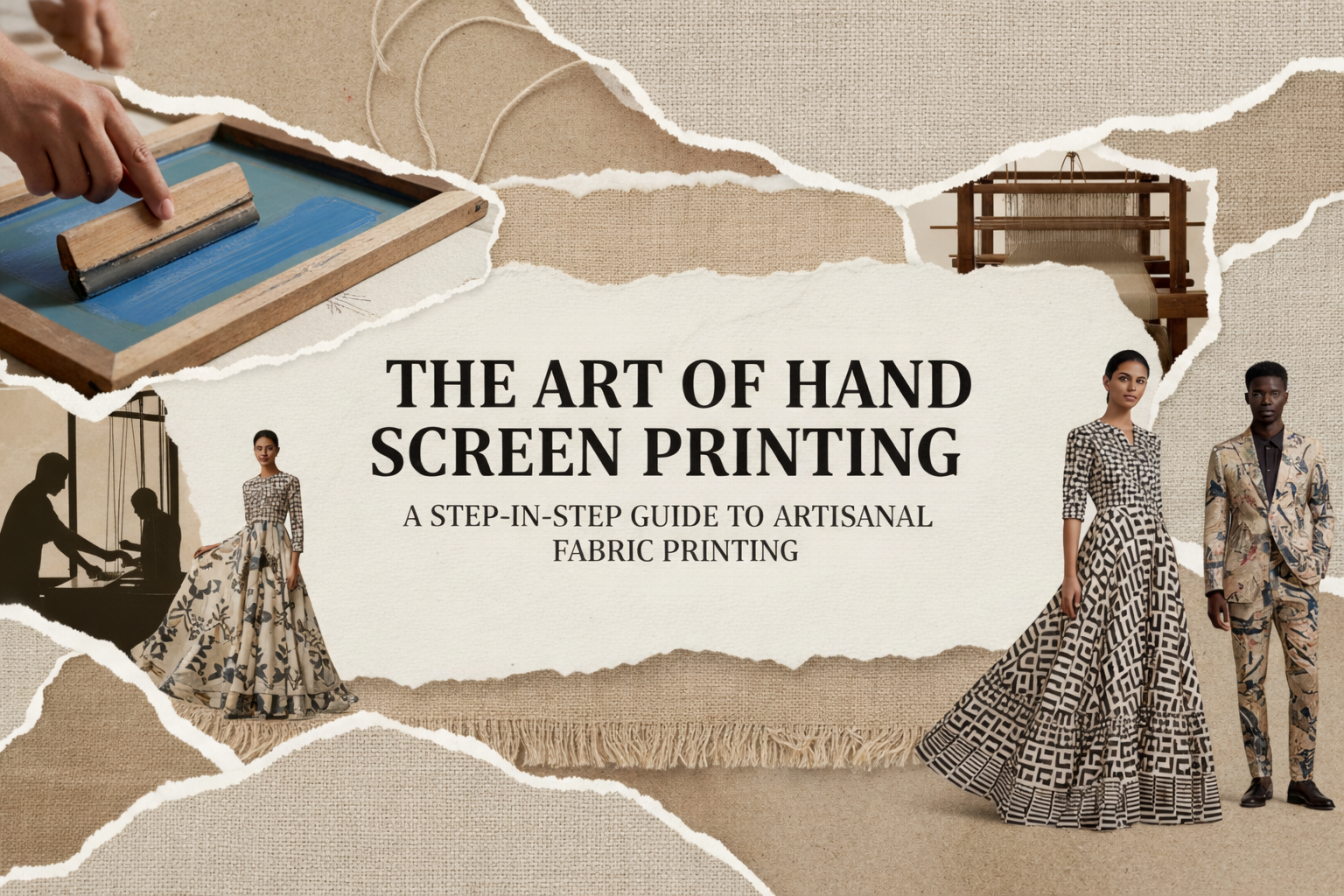
The Art of Hand Screen Printing: A Step-by-Step Guide to Artisanal Fabric Printing

In the world of fast fashion and rapid digital reproduction, the soul of a textile is often lost to the hum of high-speed machinery. However, for designers and brands committed to sustainability and craftsmanship, the hand screen printing process offers an unparalleled depth of character. At Anuprerna, we believe that a fabric is more than just a material; it is a canvas of cultural heritage.
Screen printing, in its manual form, is an intricate dance between the artisan’s steady hand and the textured surface of handwoven fabrics. Unlike its digital counterparts, manual screen printing allows for a rich saturation of color and a tactile finish that breathes life into every yard. Whether it is the rustic charm of khadi cotton or the elegant sheen of silk, the printing process must respect the integrity of the weave.
In this comprehensive guide, we will take you behind the scenes of our workshops in East India. You will learn the technical nuances of the artisanal fabric printing journey from the initial mesh preparation to the final curing of the masterpiece. By the end of this article, you will understand why hand-printed textiles remain the gold standard for sustainable, high-end fashion.
Understanding the Foundation: Why Manual Screen Printing Matters
The core of screen printing lies in its simplicity and versatility. At its most basic level, the process involves using a mesh screen to transfer ink onto a substrate, except in areas made impermeable to the ink by a blocking stencil. However, when we transition to the hand screen printing process, the "simplicity" becomes a highly skilled craft.
The Human Element in Artisanal Fabric Printing
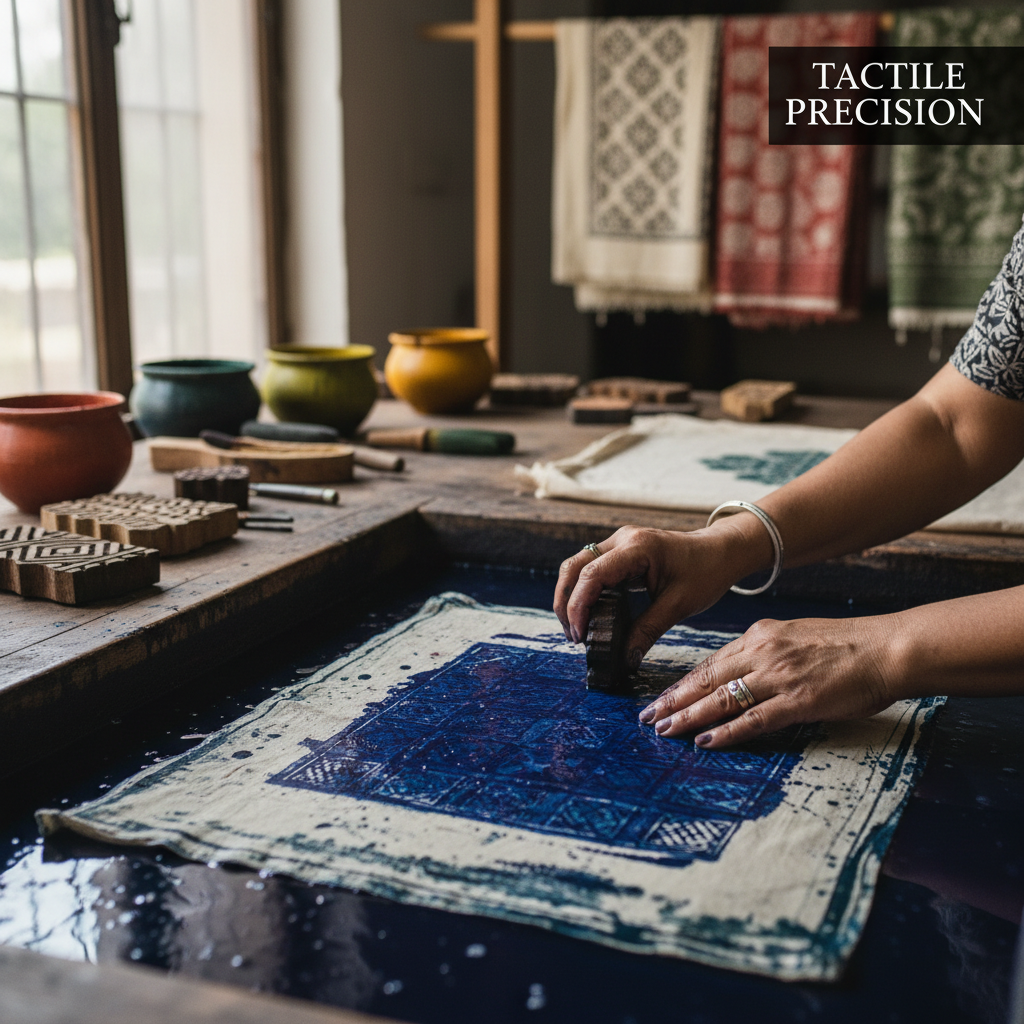
In a B2B context, the choice between digital and manual often comes down to the "feel" of the final product. Manual printing allows the artisan to adjust the pressure of the squeegee based on the specific GSM (Grams per Square Meter) of the fabric. For instance, when working with a fabric like our Screen Print Cotton Khadi, the printer knows exactly how much force is needed to ensure the ink penetrates the hand-spun yarns without bleeding through.
Sustainability and the Low-Carbon Footprint
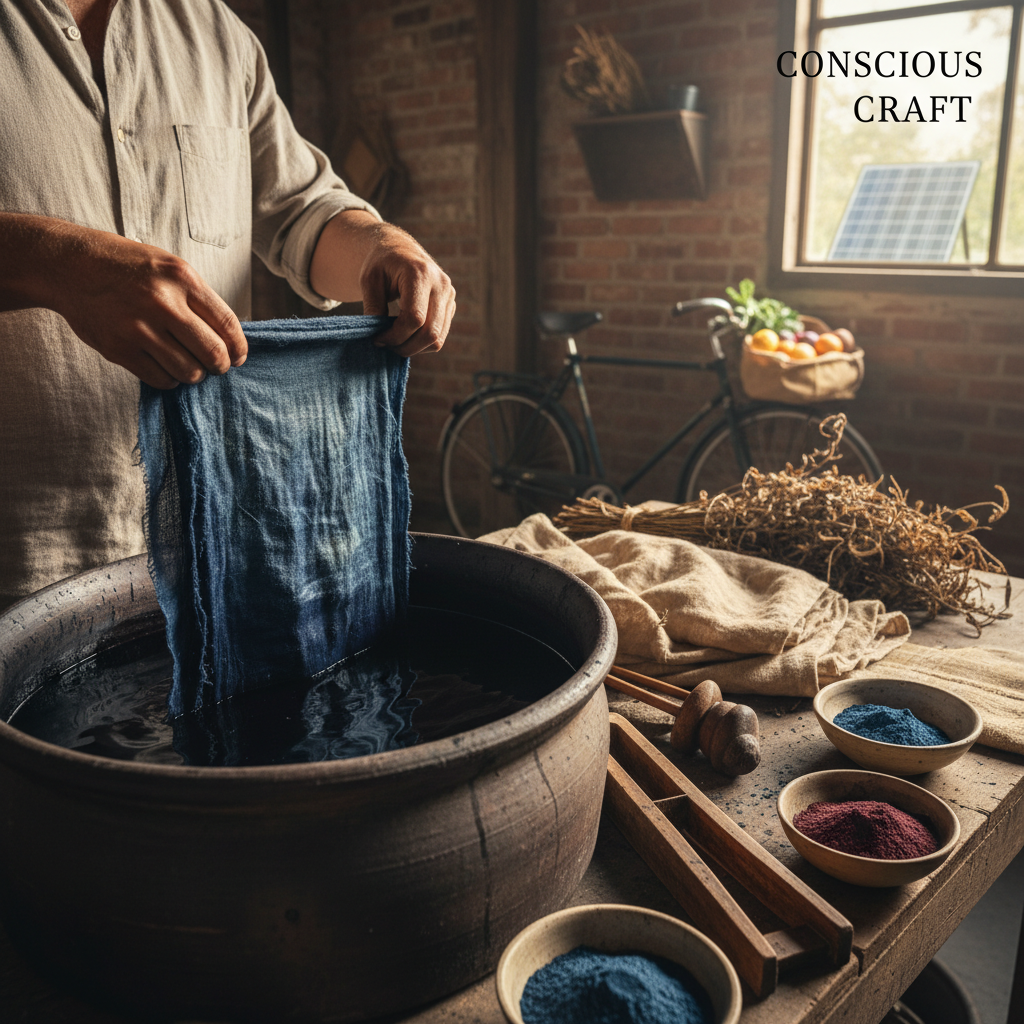
One of the primary reasons global brands are returning to manual screen printing is its environmental impact. This process requires significantly less electricity than industrial rotary printing machines. Furthermore, at Anuprerna, we prioritize water-based inks and pigments that are safer for both the artisans and the ecosystems surrounding our craft clusters.
Step 1: Design and Color Separation
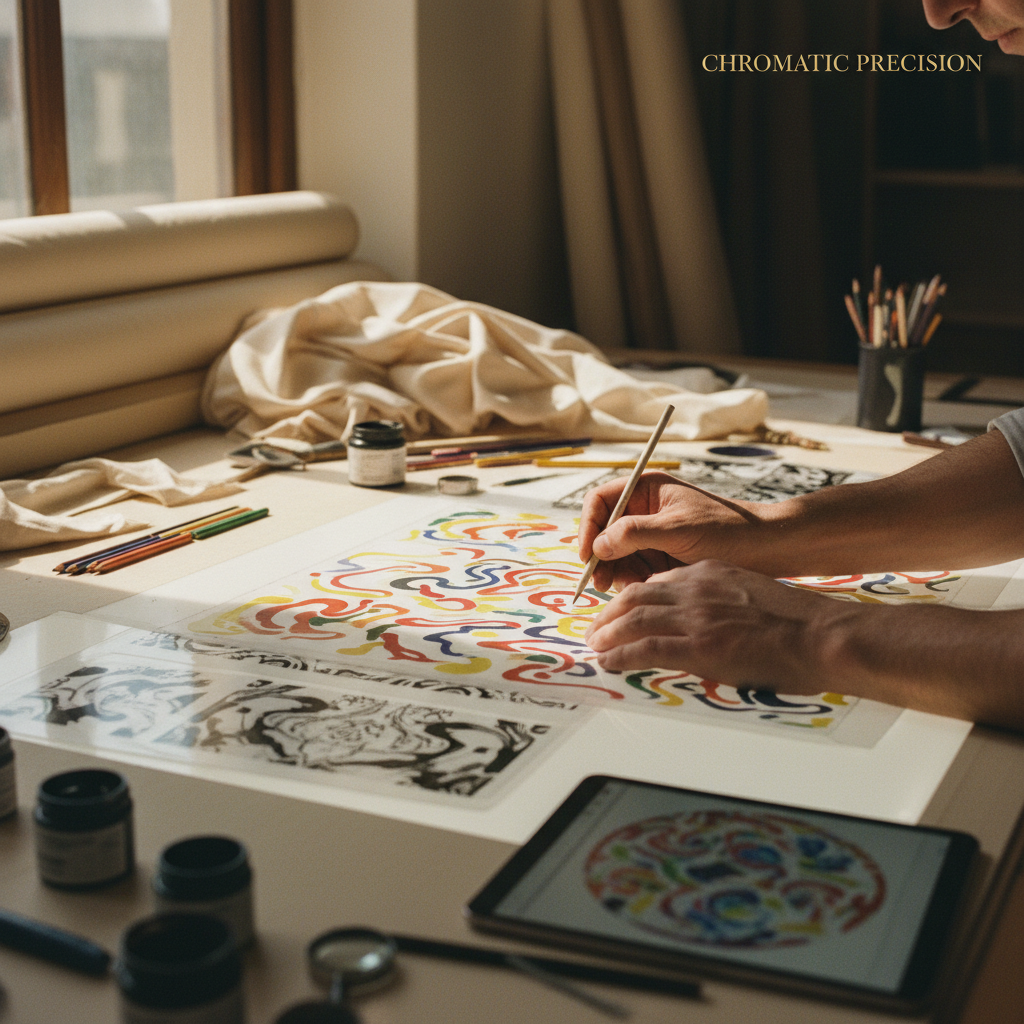
Every masterpiece begins with a vision. In artisanal fabric printing, the design phase is critical because each color in a pattern requires its own separate screen.
The Art of the Repeat
Unlike a single canvas painting, fabric printing requires a "repeat" pattern. Our designers work closely with artisans to ensure that the motifs whether they are traditional paisleys or modern abstracts align perfectly across the length of the fabric. For example, the Paisley Brown Black Screenprinted Cotton Khadi Fabric requires meticulous planning to ensure the intricate curves of the paisley flow seamlessly.
Color Separation
Once the design is finalized, it is separated into individual color layers. If a design has five colors, five different screens must be prepared. This is where the complexity of the hand screen printing process truly begins, as each screen must be registered (aligned) with mathematical precision to avoid overlapping or gaps.
Step 2: Preparing the Mesh and Screen
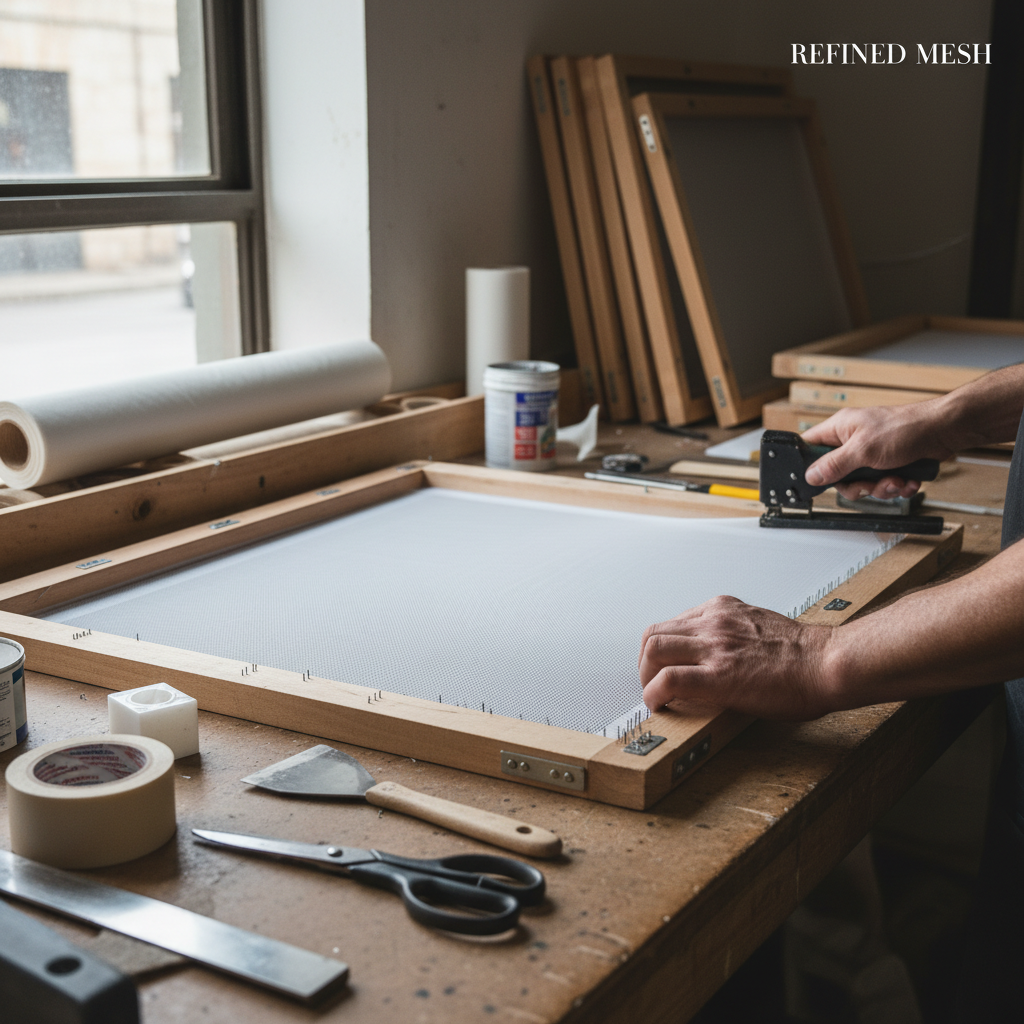
The "screen" in screen printing is a frame traditionally wood, now often aluminum, tightly stretched with a fine mesh.
Choosing the Right Mesh Count
The mesh count refers to the number of threads per inch.
- Lower mesh counts (near 110-125): These have larger openings and are used for heavier inks or when a high volume of ink needs to be deposited, ideal for thicker handwoven fabrics.
- Higher mesh counts (200-300): These are used for fine details and thinner inks.
Coating with Emulsion
The mesh is coated with a light-sensitive emulsion. This must be done in a "darkroom" environment to prevent premature curing. Once the emulsion is dry, the screen is ready for “burning,” the process of transferring the design onto the mesh.
Expert Tip: Ensure the emulsion layer is thin and even. An uneven coating can lead to "sawtooth" edges on your prints, ruining the crispness of the design.
Step 3: The Exposure and Development Process
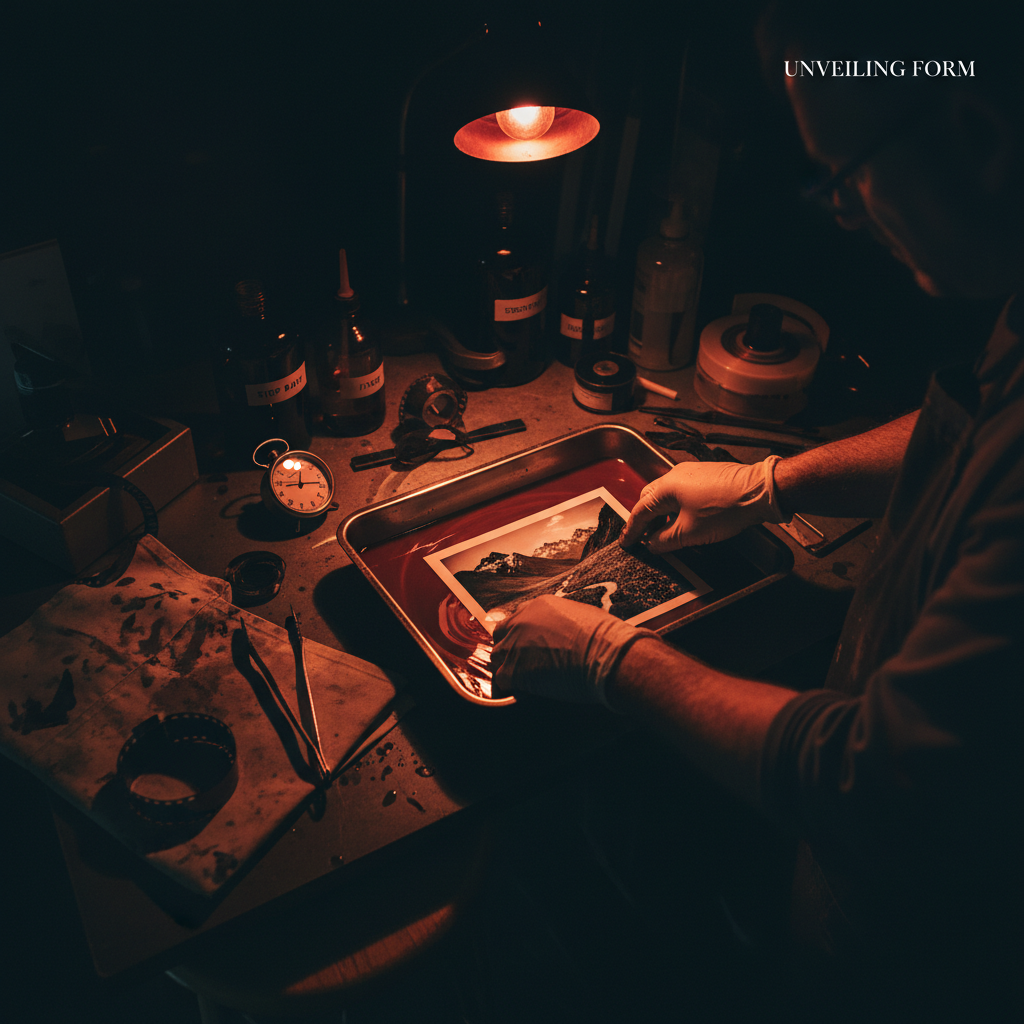
This is the "magic" moment where the design appears on the screen.
- The Film Positive: A transparent film with the design printed in opaque black is placed against the emulsion-coated screen.
- UV Exposure: The screen is exposed to a strong UV light source. The light hardens the emulsion where the film is clear. Where the design is black, the light is blocked and the emulsion remains soft.
- The Washout: After exposure, the screen is sprayed with water. The soft, unexposed emulsion washes away, leaving behind a perfect stencil of the design on the mesh.
Step 4: The Printing Table Setup
In manual screen printing, the table is as important as the screen. These tables can be up to 30-50 meters long, allowing for the continuous printing of fabric bolts.
Fabric Adhesion
The khadi cotton or silk fabric is stretched tightly over the padded table and held in place with a light adhesive or pins. This prevents the fabric from shifting during the printing process. When working with delicate variations like our Geometric Blue Screenprinted Cotton Khadi Fabric, maintaining perfect tension is vital to ensure the geometric lines remain straight.
Registration Rails
A metal rail runs along the side of the table with adjustable "stops." These stops ensure that when the printer moves the screen from one section to the next, it lands in the exact same spot every time, ensuring the pattern repeat is flawless.
Step 5: The Master Stroke– Ink Application
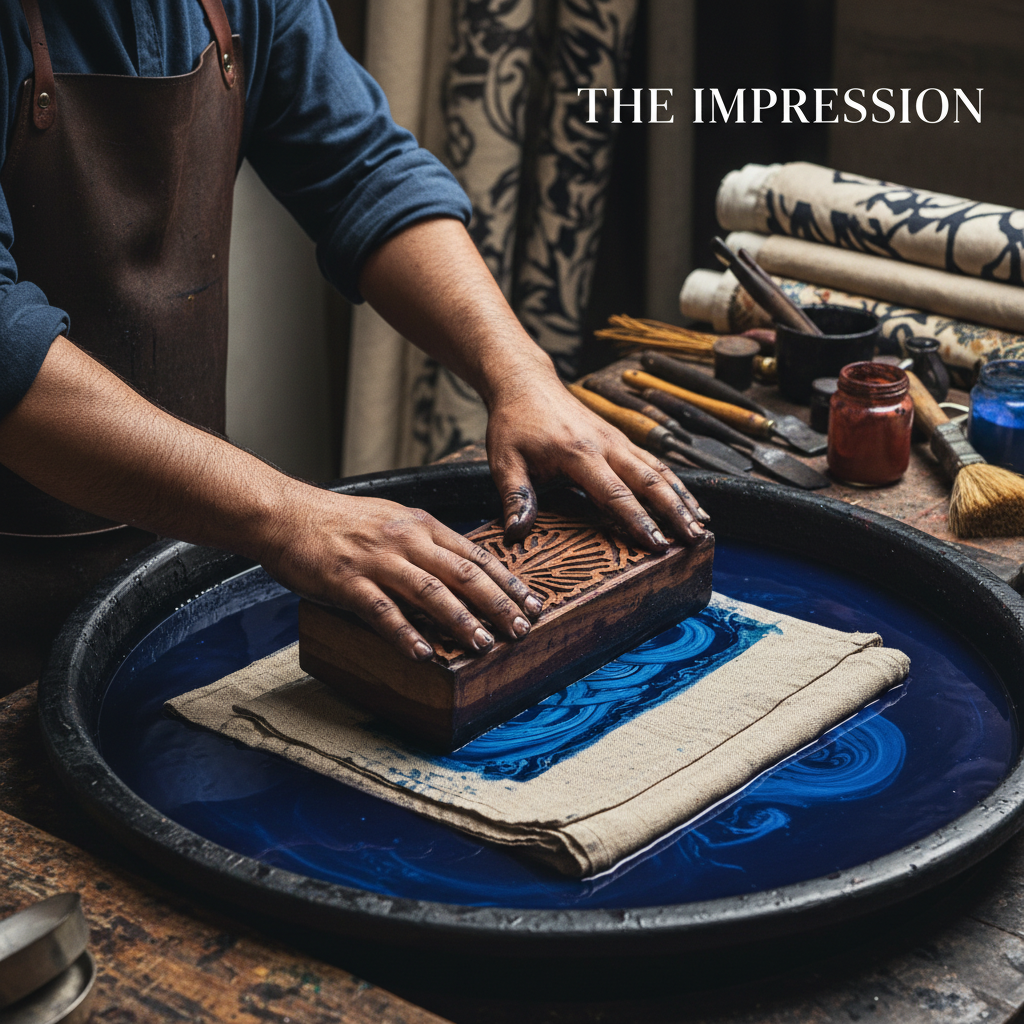
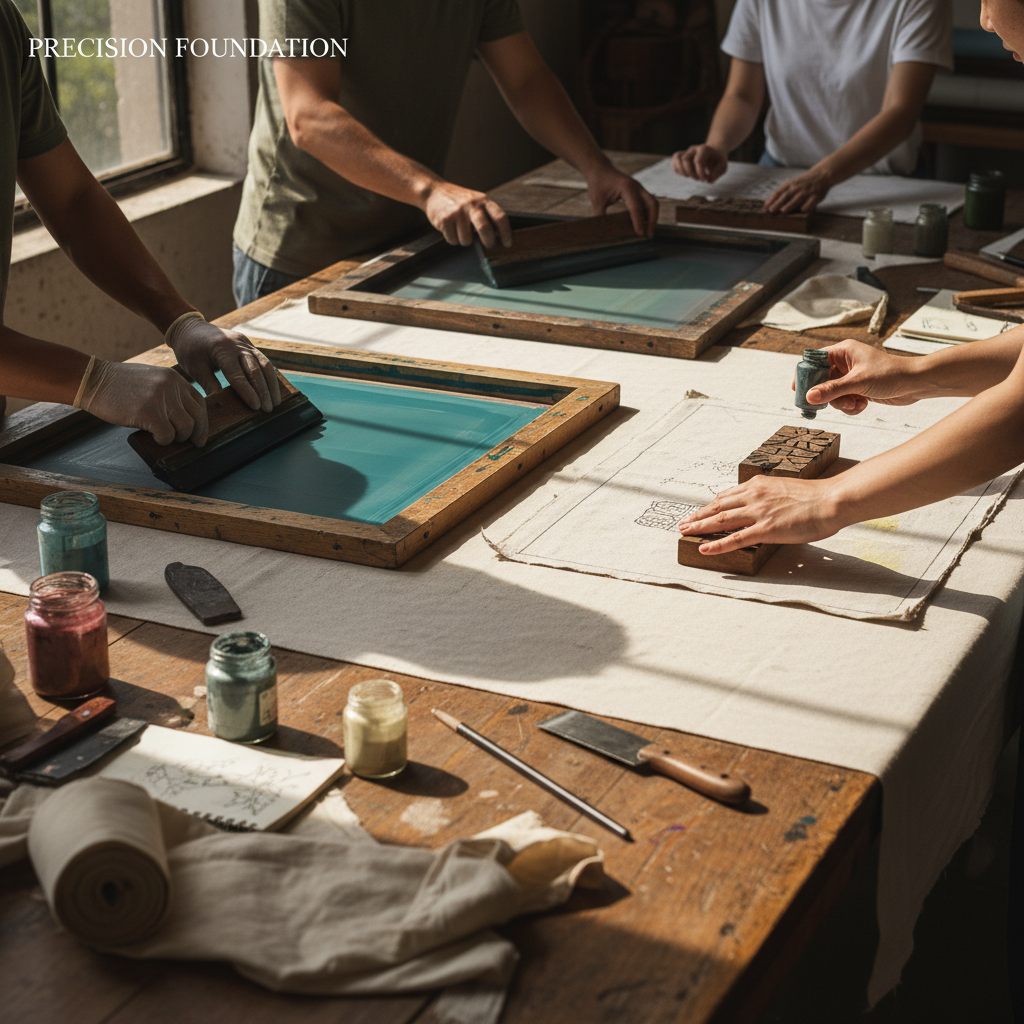
Now, the actual screen printing begins. This requires two artisans working in tandem on either side of the wide table.
Mixing the Pigments
Colors are mixed by hand to match the designer's palette. Because handwoven fabrics have natural variations in yarn thickness, the ink consistency must be adjusted. A slightly thicker ink might be used for an Abstract Brown Black Screenprinted Cotton Khadi Fabric to ensure the dark tones remain bold against the natural khadi base.
The Squeegee Pull
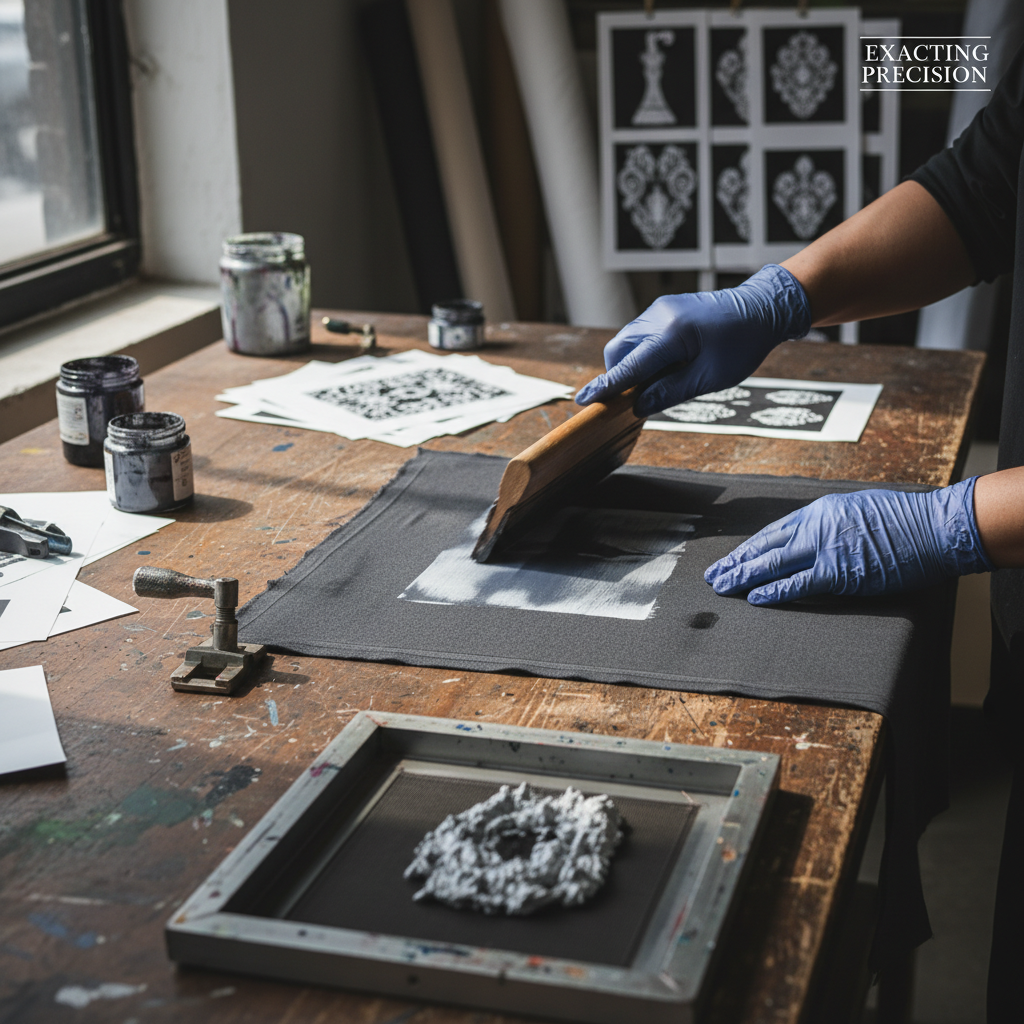
The screen is placed on the fabric. Ink is poured at one end. Using a rubber-bladed squeegee, the artisans pull the ink across the screen with firm, even pressure. This forces the ink through the open areas of the mesh and onto the fabric.
Pro Tip: The angle of the squeegee (usually 45 to 60 degrees) and the speed of the pull determine the ink's depth. A slower pull deposits more ink, which is often necessary for the highly absorbent fibers of khadi cotton.
Step 6: Curing and Finishing
Once the entire length of the fabric is printed, it must be dried and "cured" to make the print permanent and washable.
- Air Drying: The fabric is often hung from racks above the printing tables to air dry naturally.
- Heat Fixation: To ensure colorfastness, the fabric is passed through a curing machine or ironed at high temperatures. This bonds the pigment to the fibers of the handwoven fabrics.
- Washing: Some fabrics undergo a final wash to remove any excess pigment or stiffening agents used during the process, resulting in a soft, wearable hand-feel.
Common Mistakes to Avoid in Manual Screen Printing
Even for experienced artisans, the hand screen printing process presents challenges. Here are the most common pitfalls:
- Bleeding: If the ink is too thin or the squeegee pressure is too high, the ink can bleed beyond the design edges.
- Misregistration: If the fabric isn't pinned correctly or the screen isn't seated against the stops, the colors won't align. This is particularly noticeable in multi-colored prints like our Rose Brown Blue Screenprinted Cotton Khadi Fabric.
- Ink Drying in the Screen: Since manual printing takes time, water-based inks can dry and clog the mesh. Artisans must keep the mesh "flooded" with ink between pulls.
- Ghosting: This occurs when a faint image of a previous print appears on the next section, usually due to improper cleaning of the screen underside.
Printed by Hand. Defined by Intention
The hand screen printing process is a testament to the beauty of slow fashion. It is a bridge between the ancient traditions of handwoven fabrics and contemporary design aesthetics. While digital printing offers speed, it cannot replicate the "living" quality of a hand-screened textile, the slight variations that tell the story of the artisan who made it.
By choosing artisanal fabric printing, your brand supports rural communities in East India and promotes a manufacturing model that respects the planet. At Anuprerna, we invite you to explore the tactile richness of our screen-printed collections and join us in our mission to keep these traditional crafts thriving.
Are you ready to elevate your next collection with authentic hand-printed textiles? Explore our full range of screen-printed handwoven fabrics here and discover the Anuprerna difference.
most asked questions
What is the main difference between hand screen printing and digital printing?
The primary difference lies in ink penetration and texture. Screen printing uses thicker layers of ink (often pigments or dyes) that sit on and within the fibers, creating a vibrant, tactile finish. Digital printing acts more like an inkjet printer, spraying tiny droplets onto the surface. Manual screen printing is also more sustainable for small-to-medium runs and supports artisanal livelihoods, whereas digital printing is highly mechanized.
Is screen printing on khadi cotton durable?
Yes, when the hand screen printing process is followed by proper heat curing, the prints are highly durable and colorfast. Khadi cotton, due to its slightly open and irregular weave, actually absorbs the ink exceptionally well, often leading to a print that feels like a natural part of the fabric rather than a layer on top. We recommend gentle washing to maintain the fabric's integrity over time.
How many colors can be used in a single hand-screened design?
While there is technically no limit, most artisanal fabric printing designs use between 1 to 5 colors. Each color requires a separate screen and a separate "pass" down the printing table. Increasing the number of colors increases the complexity of registration and the cost of production. However, the results of multi-color prints like our floral or abstract patterns are stunningly rich.
What makes the "hand" of hand-screened fabric unique?
The "hand" refers to the feel of the fabric. In manual screen printing, the artisan can control the "strike-off"—the amount of pressure used. This ensures that even with a heavy print, the fabric retains its drape. Furthermore, the slight, nearly invisible irregularities in a hand-printed run give the textile a "soul" and authenticity that mass-produced fabrics lack.
Can I request custom designs for screen printing on Anuprerna fabrics?
As a B2B manufacturer, Anuprerna often collaborates with designers to bring custom visions to life. The hand screen printing process is ideal for custom developments because the setup costs for screens are relatively low compared to industrial rollers. We can print your unique motifs on our signature handwoven fabrics, including various weights of khadi and silk.
More Blogs
textile export wholesale: everything buyers need to know
what is french terry material? a deep dive into loop-back cotton
how to sew with raw silk: tips for textile designers
designing with honeycomb material: best uses for waffle weave textiles
raschel knit vs warp knit: understanding the differences
jamdani fabric online: what it is, how to identify authentic jamdani from bengal & how to buy