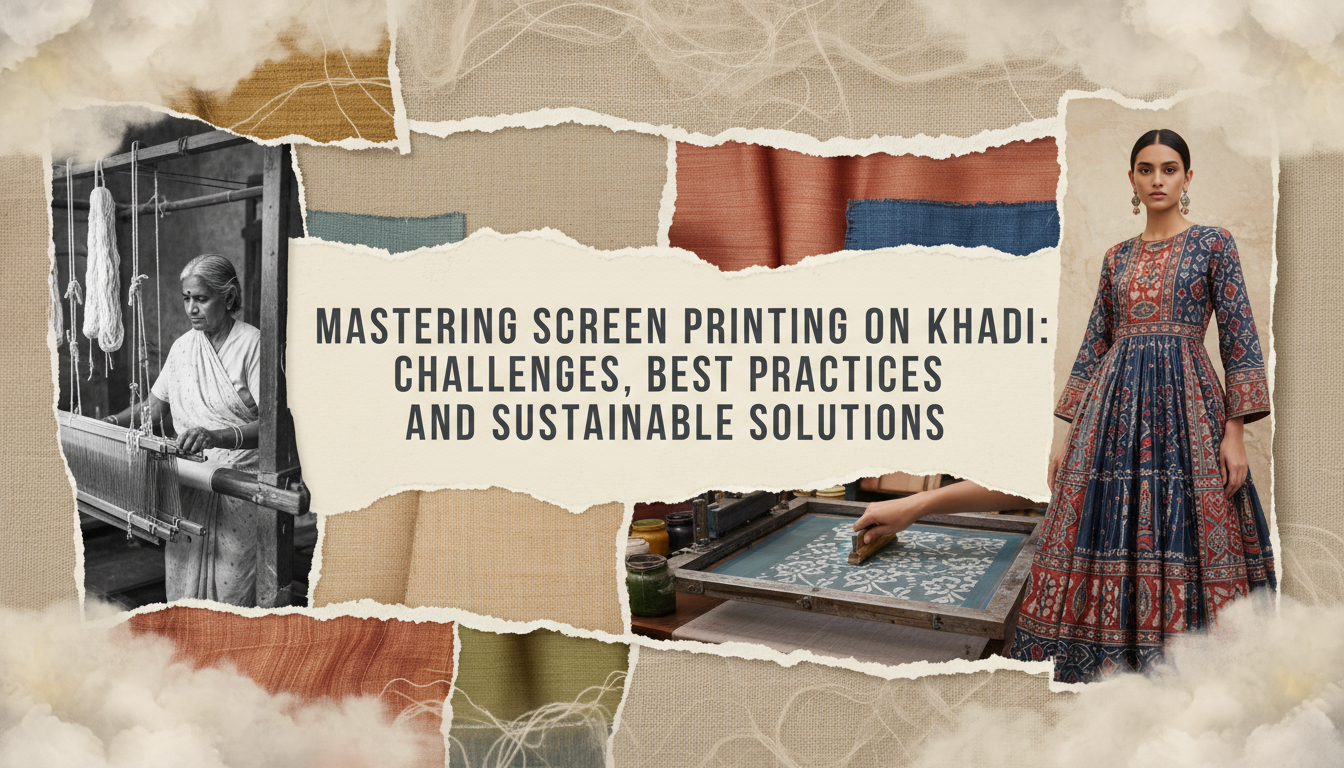
Mastering Screen Printing on Khadi: Challenges, Best Practices, and Sustainable Solutions

In the evolving landscape of sustainable fashion, Khadi has transitioned from a symbol of national self-reliance to a luxury textile sought after by global designers. As a B2B partner, understanding how to apply modern surface ornamentation specifically screen printing onto this traditional handspun fabric is essential for creating contemporary collections that honor heritage.
Khadi is unique; it is a fabric that breathes, possesses a distinct "slubby" texture, and carries the soul of the weaver. However, these very characteristics the uneven yarn thickness and the porous nature of handspun fibers pose significant hurdles for standard screen printing setups designed for uniform, mill-made textiles. For designers and khadi garments manufacturers, the goal is to achieve crisp designs without losing the organic hand-feel that makes Khadi so desirable.
In this comprehensive guide, we will explore the technical nuances of screen printing on khadi, the common pitfalls in khadi textile manufacturing, and the best practices that ensure your sustainable garments stand out in a crowded marketplace. Whether you are looking to buy khadi fabrics online for the first time or are an established brand scaling your production, these insights will help you master the alchemy of ink and handwoven craft.
Understanding the Canvas: Why Khadi is Different
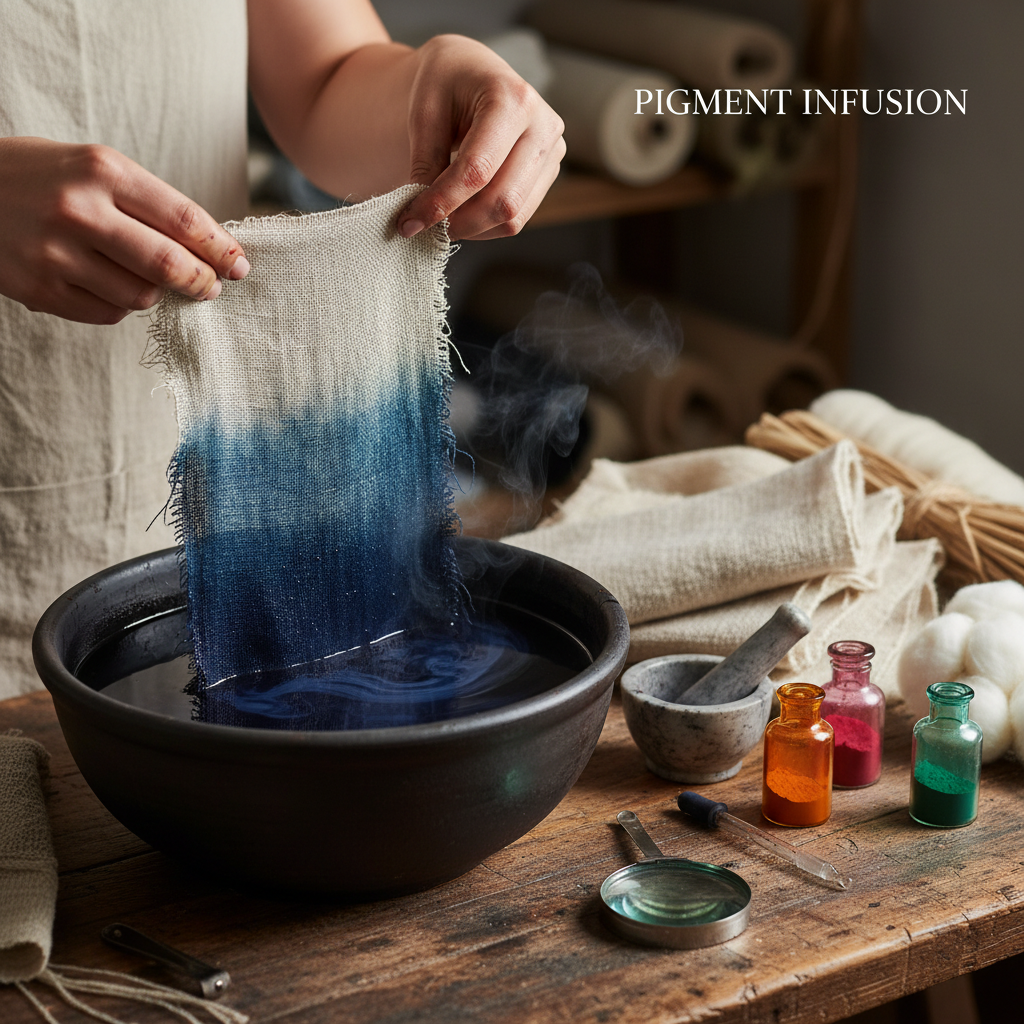
Before diving into the mechanics of the squeegee and mesh, one must understand the "canvas." Unlike powerloom fabrics, Khadi is handspun and handwoven. This means the tension of the weave varies, and the thickness of the yarn fluctuates throughout the bolt.
The Role of Slubs and Texture
In the world of khadi textile manufacturing, "slubs" are the small lumps or thick spots in the yarn. While these are considered defects in industrial manufacturing, in the sustainable sector, they are the hallmark of authenticity. When performing screen printing, these slubs can cause "skipping," where the ink does not reach the recessed areas of the fabric, or "bleeding," where excess ink pools around a thick yarn.
Absorbency and Fiber Porosity
Handspun cotton fibers are often less tightly twisted than machine-spun ones. This creates a highly porous structure that drinks up ink. If your ink is too thin, the design will lose definition as the pigment spreads through capillary action. If it is too thick, it sits on top of the fibers like a plastic film, ruining the soft "hand" of the Khadi. Understanding this balance is the first step toward high-quality handspun fabric printing.
Technical Challenges of Screen Printing on Khadi
1. Registration Issues
Because Khadi is handwoven, the grainline is rarely perfectly straight. When printing multi-color designs that require precise registration, the natural "give" and stretch of the handloom can cause colors to misalign. For khadi garments manufacturers, this often means designing prints that allow for a slight "organic" overlap or choosing motifs that don't rely on microscopic precision.
2. Ink Penetration vs. Surface Coating
A common mistake in screen printing on textured surfaces is over-flooding the screen to ensure the ink reaches every crevice. On Khadi, this leads to a "heavy" feel. The challenge lies in achieving a vibrant color yield while maintaining the fabric's breathability. For more on the nuances of this process, you can read our deep dive into screen printing on natural fabrics.
3. Shrinkage and Distortion
Khadi has a higher shrinkage rate than pre-shrunk mill fabrics. If the fabric is not properly scoured and pre-shrunk before the printing process, the design will distort after the first wash. This is a critical step in the B2B supply chain to ensure garment longevity.
Best Practices for High-Quality Screen Printing on Khadi
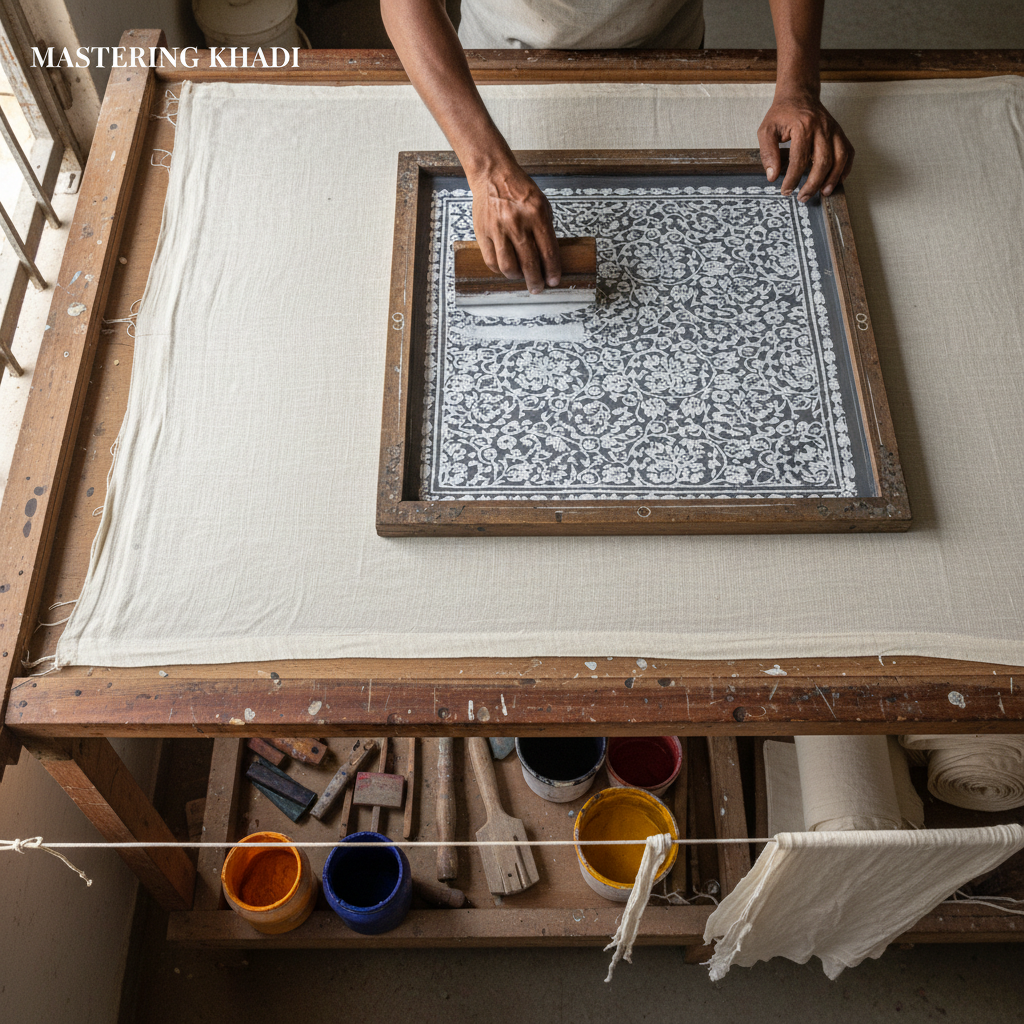
To achieve professional, retail-ready results, khadi textile manufacturing units follow a specific set of protocols. Here are the industry best practices:
Selection of Mesh Count
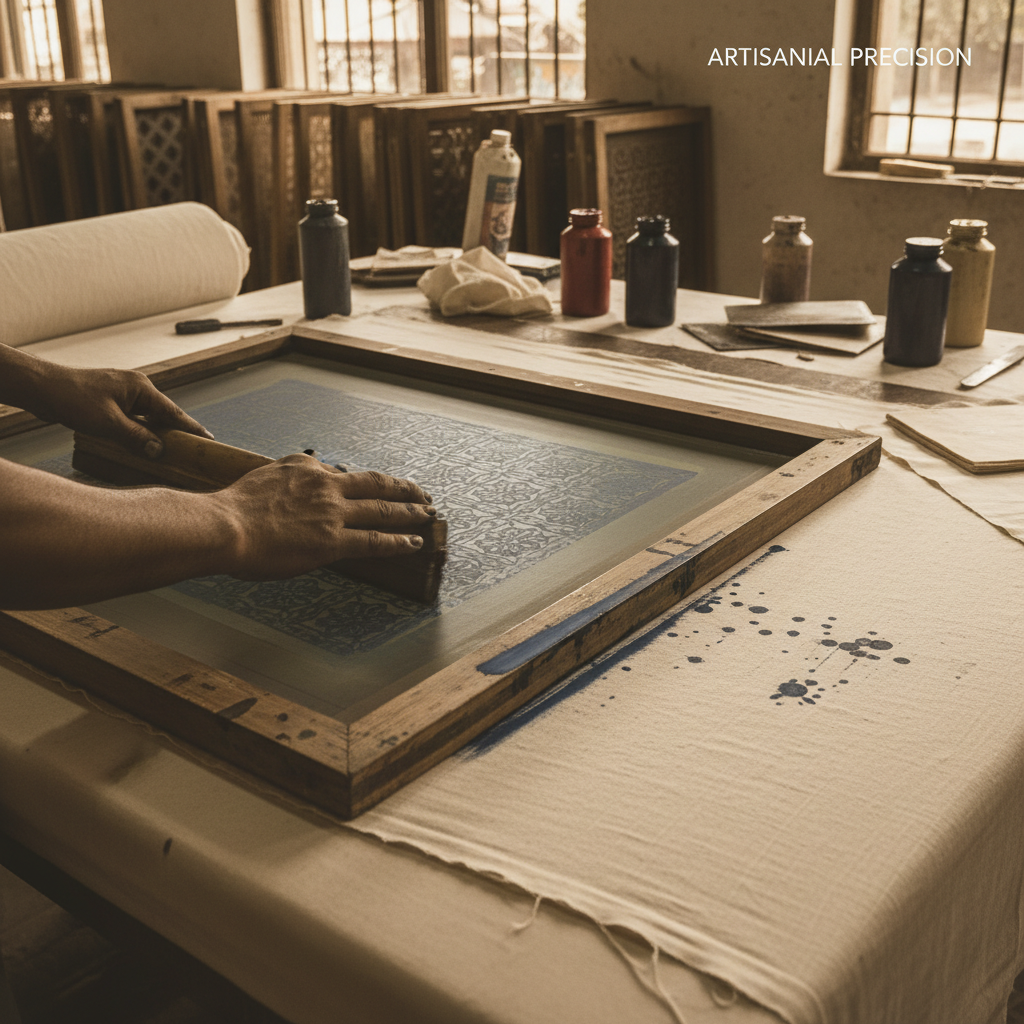
The mesh count determines how much ink is deposited. For Khadi, a lower mesh count (between 80 to 110) is often preferred for solid blocks of color to allow enough ink to penetrate the uneven surface. However, for finer details, a higher mesh (up to 155) can be used, provided the ink viscosity is perfectly calibrated.
Table Preparation and Adhesives
In a professional screen printing setup, the Khadi must be pinned or glued to a padded printing table. Because Khadi is more elastic than powerloom fabric, a stronger (but fabric-safe) adhesive is required to ensure the fabric does not shift between color applications.
Post-Printing: Curing and Softening
Once printed, Khadi requires careful curing. Heat setting the ink is vital for wash-fastness. Furthermore, a post-print enzyme wash can help restore any softness lost during the ink application, ensuring the final product meets the luxury standards expected when customers buy khadi fabrics online.
Sourcing for Success: Choosing the Right Manufacturing Partner
For B2B buyers and fashion labels, the success of a printed Khadi collection depends heavily on the sourcing stage. Not all Khadi is created equal, and not all printers understand the quirks of handloom.
Why Quality Sourcing Matters
When you source wholesale fabrics for your brand, you must ensure the Khadi has a consistent reed and pick (thread count). While variations are expected, extreme inconsistency makes screen printing nearly impossible at scale.
The Anuprerna Advantage
At Anuprerna, we bridge the gap between traditional artisan skill and modern quality requirements. We work directly with weaver clusters across East India to ensure that the Khadi we produce is "print-ready." Our expertise in khadi textile manufacturing allows us to advise brands on which weight of Khadi, be it a light 30s count for scarves or a heavy 10s count for jackets, is best suited for their specific screen printing designs.
The Sustainable Edge: Why Printed Khadi is Trending
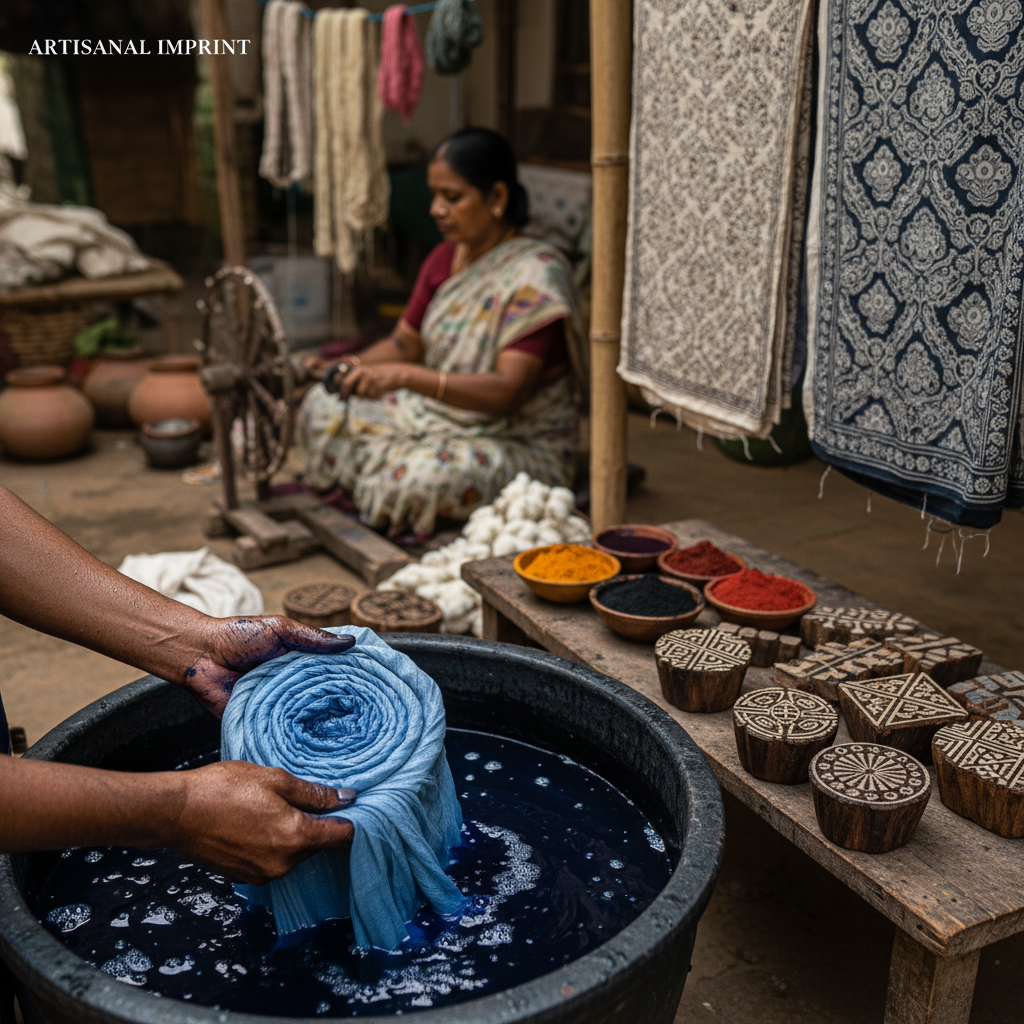
The modern consumer is increasingly looking for "the story" behind the garment. A screen-printed Khadi shirt isn't just a piece of clothing; it's a marriage of two distinct crafts: the art of hand-spinning and the art of manual printing.
Lower Carbon Footprint
Screen printing on khadi is inherently more sustainable than digital printing on synthetic blends. Khadi production requires no electricity, and when paired with manual screen printing and eco-friendly inks, the carbon footprint of the resulting textile is remarkably low. This aligns perfectly with the growing demand for sustainable fabrics for apparel.
Supporting Artisan Communities
By choosing to work with khadi garments manufacturers who utilize traditional printing methods, brands directly support the livelihoods of both weavers and printers. This dual-craft approach adds a layer of social impact that resonates deeply with conscious consumers.
From Craft to Contemporary: The Future of Printed Khadi
Screen printing on Khadi is a delicate balance of technical precision and respect for imperfection. While the challenges of texture, absorbency, and registration are real, the rewards are unparalleled. The result is a textile that feels alive, a fabric that tells a story of human touch in every thread and every stroke of the squeegee.
For brands looking to innovate within the sustainable space, mastering screen printing on handspun bases is a powerful way to differentiate. By following best practices in pre-treatment, ink selection, and sourcing, you can create collections that are both ethically sound and aesthetically superior.
Are you ready to elevate your next collection with the timeless appeal of printed Khadi? Explore our range of authentic handspun fabrics or consult with our experts to bring your designs to life.
most asked questions
Does screen printing on Khadi fade faster than on regular cotton?
No, if the correct inks are used and properly cured, screen printing on Khadi is just as durable as on mill-made cotton. In fact, because Khadi is highly absorbent, water-based inks often penetrate deeper into the fiber, resulting in excellent wash-fastness. The key is ensuring the khadi textile manufacturing process includes a proper heat-setting stage after printing.
Can I use high-detail photographic designs for screen printing on Khadi?
While high-detail designs are possible, they are challenging due to the fabric's natural slubs and texture. For handspun fabric printing, it is generally recommended to use bold, graphic, or slightly distressed designs. If high detail is necessary, a very fine Khadi with a higher thread count should be selected to provide a smoother surface.
What is the best type of ink for sustainable screen printing on Khadi?
GOTS-certified water-based inks are the best choice. They are eco-friendly, non-toxic, and maintain the soft, breathable hand-feel of the Khadi. Pigment inks are also commonly used by khadi garments manufacturers for their vibrant color payoff on darker bases, though they can slightly stiffen the fabric if applied too thickly.
How do I prevent the fabric from shrinking after it has been printed?
The most effective way is to ensure the fabric is "scoured" and pre-washed before the screen printing process begins. This stabilizes the fibers. At Anuprerna, we recommend B2B clients specify pre-shrunk requirements during the sourcing phase to ensure the final garments maintain their shape and print integrity.
Is screen printing more sustainable than digital printing for Khadi?
In many contexts, yes. Manual screen printing does not require the heavy electricity consumption of industrial digital printers. Furthermore, it allows for the use of natural and water-based dyes that are often more compatible with the biodegradable nature of Khadi. When you buy khadi fabrics online for manual printing, you are supporting a low-carbon, artisan-led supply chain.
More Blogs
textile export wholesale: everything buyers need to know
what is french terry material? a deep dive into loop-back cotton
how to sew with raw silk: tips for textile designers
designing with honeycomb material: best uses for waffle weave textiles
raschel knit vs warp knit: understanding the differences
jamdani fabric online: what it is, how to identify authentic jamdani from bengal & how to buy