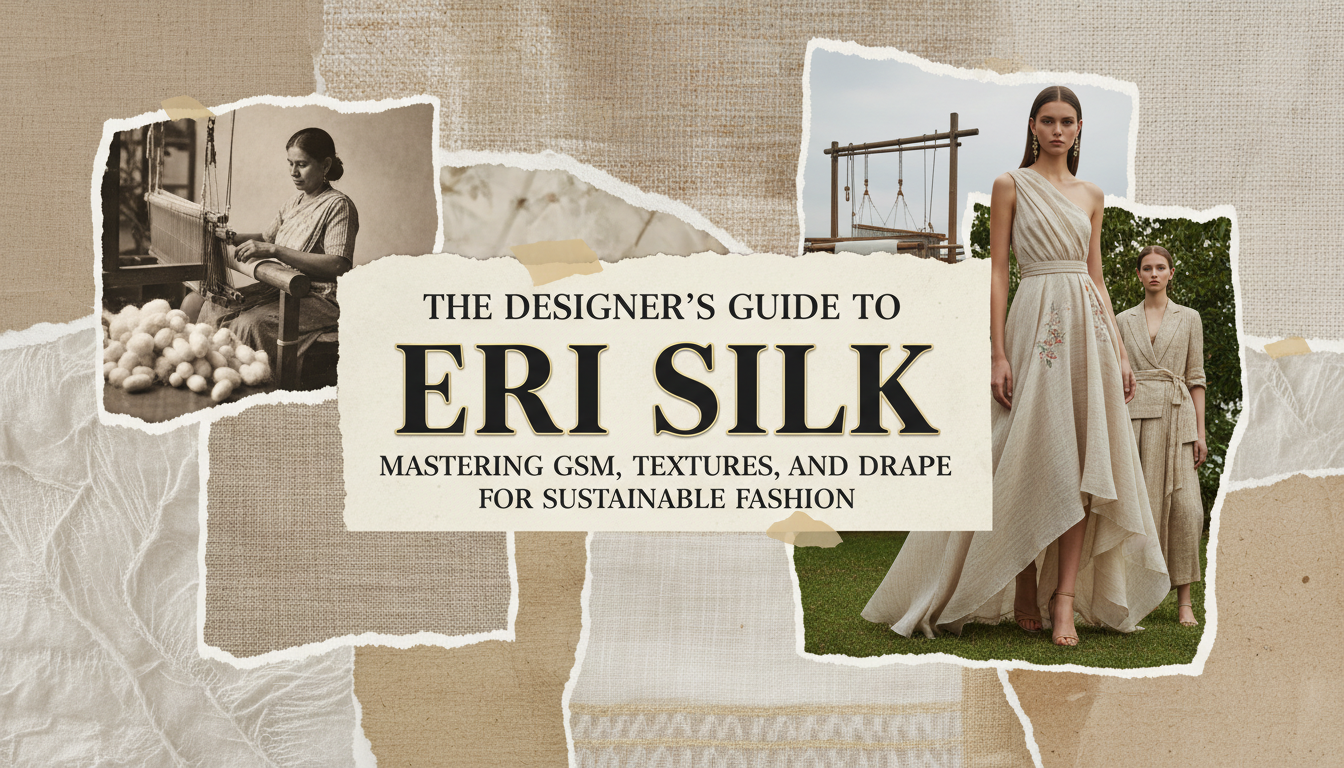
The Designer’s Guide to Eri Silk: Mastering GSM, Textures, and Drape for Sustainable Fashion

In the evolving landscape of sustainable luxury, designers are increasingly looking beyond conventional textiles to find materials that tell a story of ethics, heritage and unique tactile beauty. Among the "big four" of Indian silks alongside mulberry silk, tussar silk, and Muga, eri silk stands out as a revolutionary choice for the modern conscious brand. Often referred to as "Peace Silk" or "Ahimsa Silk," Eri is harvested after the moth has naturally left its cocoon, making it the premier choice for animal-friendly high fashion.
However, for a designer, understanding the ethical pedigree is only the beginning. To successfully integrate this fabric into a collection, one must master the technical nuances of Eri silk fabric properties. Unlike the slippery, high-shine finish of mulberry, Eri offers a wool-like warmth and a cotton-like breathability, presenting a unique set of challenges and opportunities in tailoring and silhouette construction. Whether you are aiming for structured outerwear or fluid evening wear, understanding the relationship between Eri silk GSM, weave structures and drape is essential. This guide provides an in-depth exploration of how to design with Eri silk, ensuring your creations honor both the artisan's craft and the wearer’s experience.
Understanding Eri Silk Fabric Properties: The "Wool of the East"
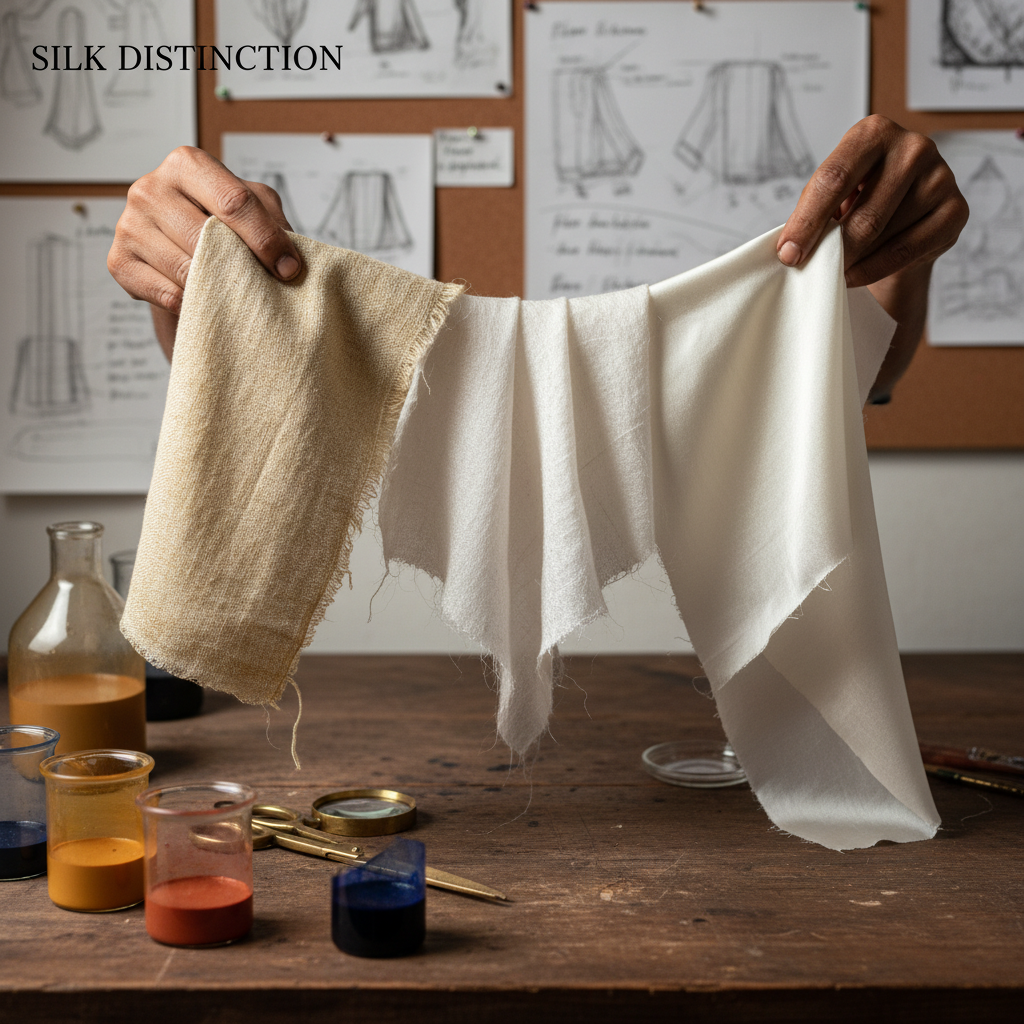
To design effectively with eri silk, one must first discard the traditional notions of what silk "should" feel like. While mulberry silk is characterized by long, continuous filaments that produce a shimmering, smooth surface, Eri is a staple fiber. This means the silk is spun similarly to cotton or wool, resulting in a textured, matte appearance that is often mistaken for fine linen or lightweight tweed.
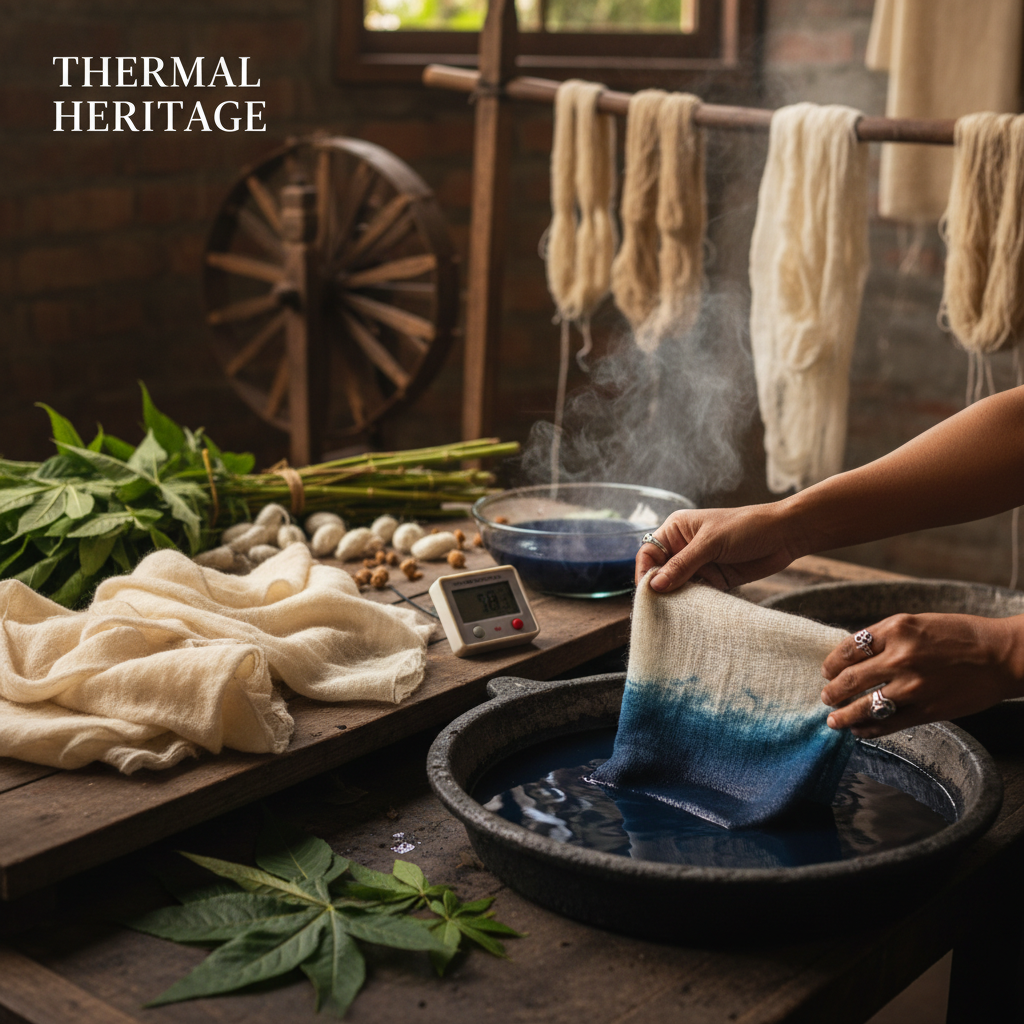
One of the most remarkable Eri silk fabric properties is its thermal regulation. It is one of the few fabrics that is truly “all-weather” keeping the wearer cool in the summer due to its breathability and warm in the winter because of its isothermal properties. This makes it an excellent choice for trans-seasonal collections.
Comparing Eri, Tussar and Mulberry
When selecting your material, it’s vital to understand where Eri sits in the hierarchy of Indian silks:
- Mulberry Silk: High sheen, high drape, very smooth. Ideal for formal wear and lingerie.
- Tussar Silk: Golden hue, coarse texture, medium drape. Great for structured ethnic wear and textured jackets. Explore our Tussar blends here.
- Eri Silk: Matte finish, soft hand-feel, wool-like bounce. Highly durable and becomes softer with every wash.
For designers looking to experiment with these differences, we recommend starting with our Indian Premium Silk Fabric Swatches to feel the distinct tactile qualities of each variety.
Expert Tip: Because Eri silk is highly absorbent, it takes natural dyes beautifully, resulting in deep, earthy tones that do not bleed as easily as other silks.
Navigating Eri Silk GSM: From Sheer Layers to Structured Coats
In textile design, GSM (Grams per Square Meter) is the most critical metric for determining a fabric's end-use. Because Eri silk can be spun into various counts, from fine, mill-spun yarns to chunky, hand-spun varieties, the Eri silk GSM range is incredibly broad.
1. Lightweight Eri (40 - 80 GSM)
At this weight, Eri silk is often blended with other fibers or spun very finely. It possesses a delicate translucency while maintaining its signature matte look.
- Best for: Scarves, light summer blouses, and layering pieces.
- Design Note: When working with low GSM Eri, consider using French seams, as the loose weave of fine handwoven silk can fray if not finished properly.
2. Medium Weight Eri (90 - 160 GSM)
This is the "sweet spot" for most fashion designers. A Plain Natural Tussar Eri Silk Blend at 66 GSM or a slightly heavier 120 GSM pure Eri fabric offers enough body for tailored garments without being overly heavy.
- Best for: Shirting, dresses, lightweight trousers, and tunics.
- Design Note: This weight holds pleats beautifully but lacks the "liquid" drape of mulberry. It is better suited for A-line silhouettes or garments with soft structure.
3. Heavy Weight Eri (180 - 300+ GSM)
Heavyweight Eri silk is a revelation for outerwear designers. It mimics the feel of high-end upholstery or heavy linen.
- Best for: Blazers, winter coats, structured skirts, and home textiles.
- Design Note: Heavy Eri is incredibly durable. It can withstand significant embroidery and embellishment without sagging.
Exploring Eri Silk Textures and Weave Structures
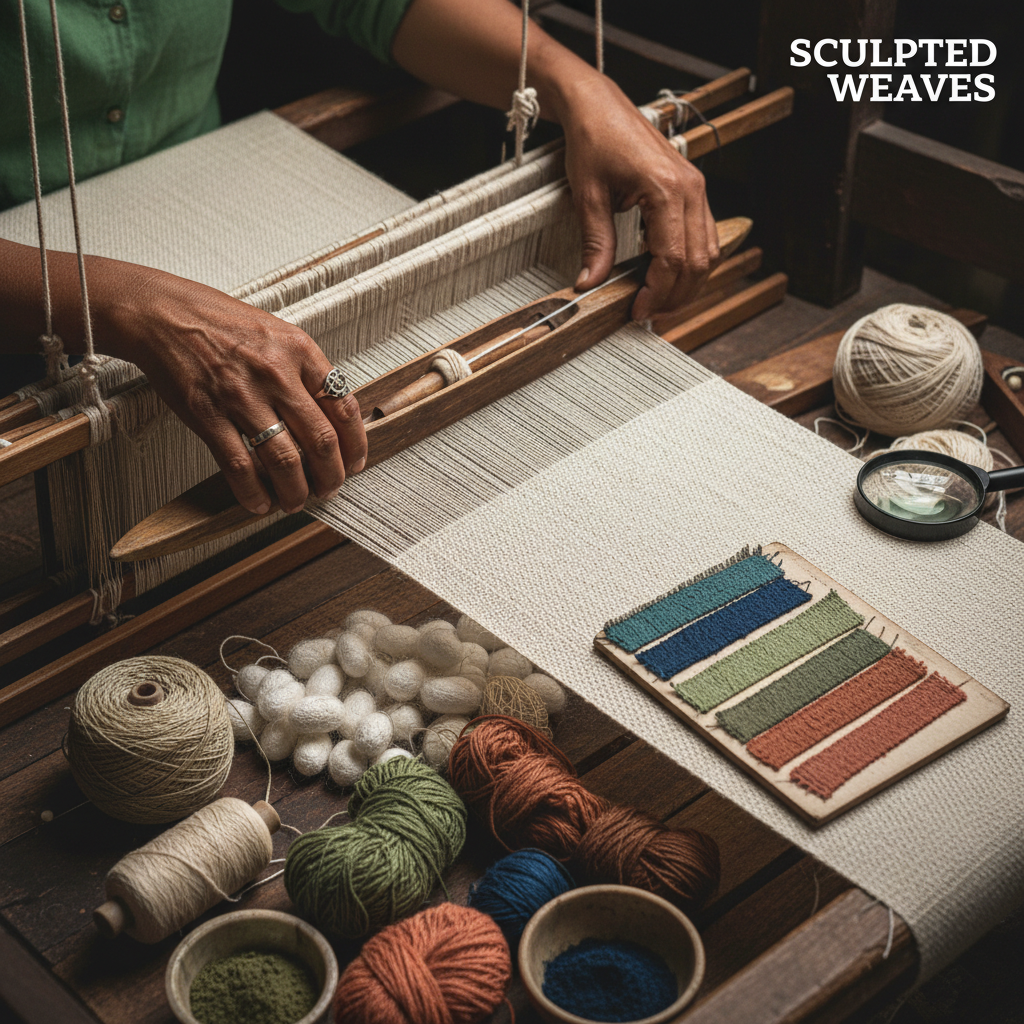
The "personality" of an Eri garment is largely dictated by its weave.
At Anuprerna, we work with artisans who specialize in various handloom techniques that highlight different Eri silk textures.
Plain Weave (Tabby)
The most common weave, where the warp and weft cross at right angles. In Eri silk, the plain weave highlights the natural "slubs" or irregularities of the hand-spun yarn. This gives the fabric an organic, artisanal look that is highly valued in sustainable fashion.
Twill and Herringbone
Eri silk twill has a distinct diagonal rib. This structure increases the fabric's durability and gives it a slightly better drape than plain weave. For menswear or structured womenswear, an Eri herringbone weave provides a sophisticated, classic aesthetic.
Blended Textures
Combining Eri with other fibers can create unique hybrid properties. For example, blending Eri with cotton increases crispness, while blending it with mulberry silk adds a hint of luster to the otherwise matte surface. Our Abstract Pink Batik Cotton Mulberry Silk Blend demonstrates how blending different silk and cotton types can result in a versatile, high-performance textile.
Mastering the Drape: Silhouette Construction with Eri Silk
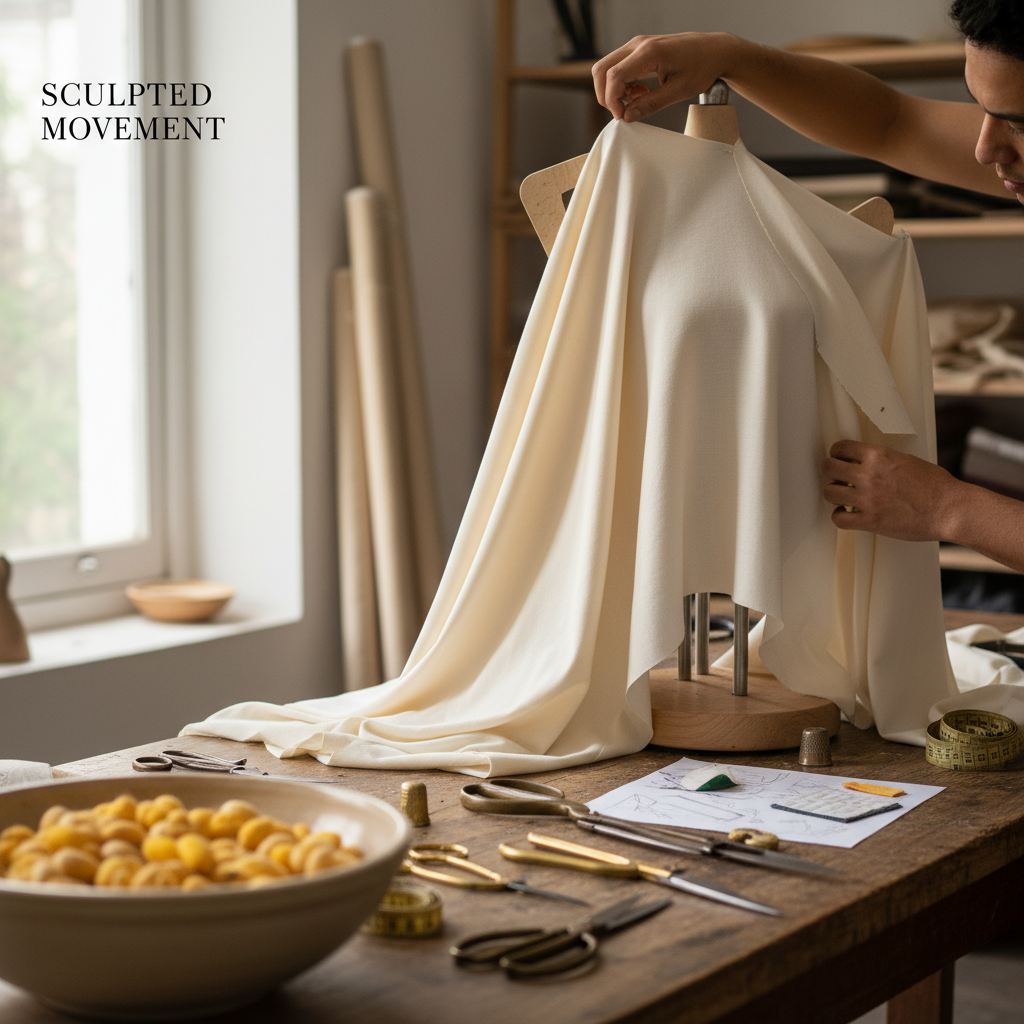
One of the most common mistakes designers make is treating Eri silk like a standard silk satin. The drape of Eri is "dry" and "bouncy" rather than "fluid" and "slippery."
Understanding the "Memory" of Eri
Eri silk has a slight "memory," meaning it holds its shape better than mulberry silk. If you are designing a garment with voluminous sleeves or a structured collar, Eri will support that volume naturally.
How to Achieve Fluidity
If your design requires a more liquid movement, look for Eri silk that has been "degummed" thoroughly or blended with a finer silk. Alternatively, cutting Eri silk on the bias can introduce a surprising amount of stretch and flow, though you must account for the fabric's weight to prevent the garment from growing too much over time.
Step-by-Step: Designing Your First Eri Silk Collection
- Source Swatches: Start by ordering a variety of silk swatches to compare GSM and textures.
- Prototype with Muslin: Because Eri behaves differently than cotton, create your first sample in the actual fabric or a heavy linen to test the drape.
- Choose the Right Needle: Use a sharp, fine needle (70/10 or 80/12) to avoid snagging the handwoven fibers.
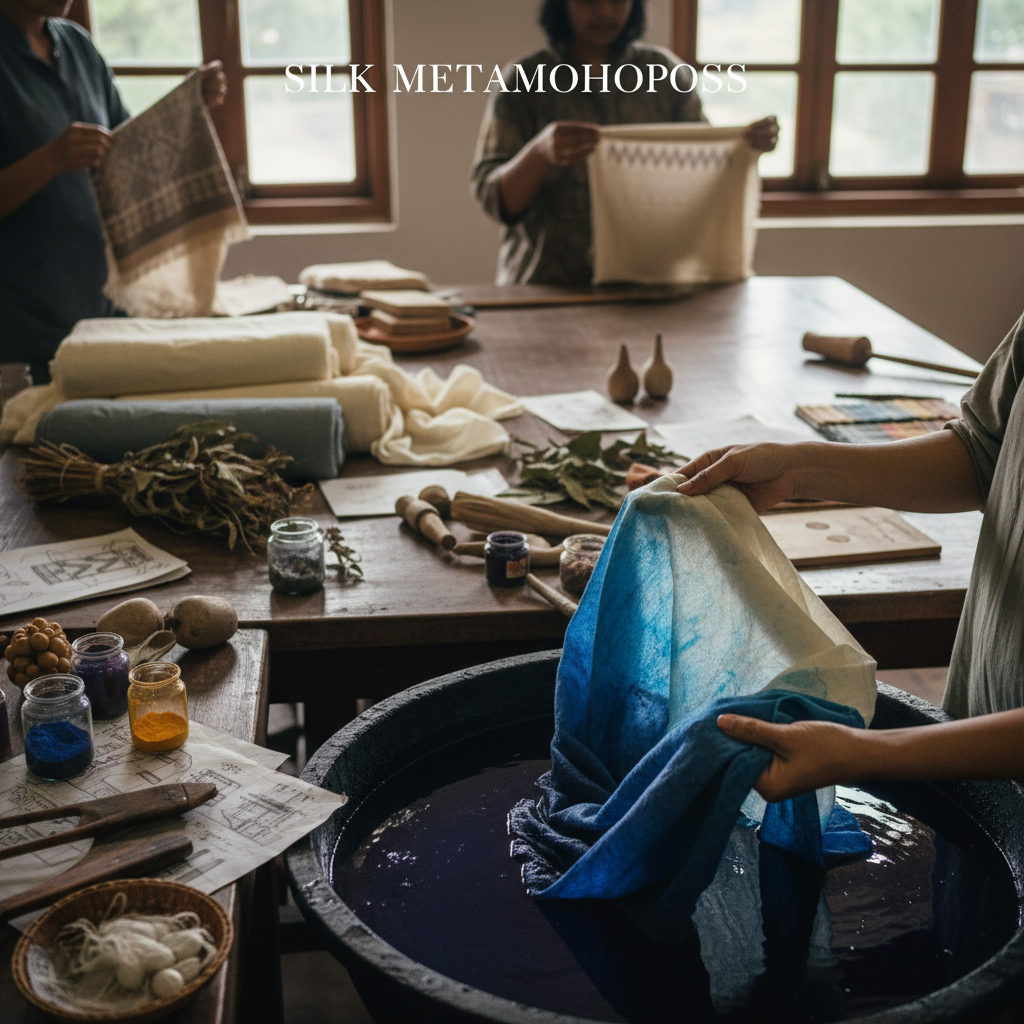
- Consider Natural Dyes: Eri silk's protein structure bonds exceptionally well with organic dyes like indigo, madder, and lac.
- Market the Story: Ensure your branding highlights the "Ahimsa" (non-violent) nature of the silk, as this is a major selling point for B2B clients and end consumers alike.
Conclusion
Designing with eri silk is an invitation to slow down and appreciate the nuances of hand-crafted textiles. By understanding the specific Eri silk fabric properties, from its unique thermal regulation to its varied Eri silk GSM, designers can create garments that are not only aesthetically striking but also ethically sound and functionally superior.
Whether you are crafting a structured blazer or a soft, textured scarf, Eri silk provides a canvas of "quiet luxury" that resonates with the modern consumer's desire for authenticity. At Anuprerna, we are committed to bridging the gap between traditional East Indian craftsmanship and contemporary global design. We invite you to explore our range of handwoven Eri and tussar silk to find the perfect foundation for your next sustainable collection.
most asked questions
Is Eri silk really "Peace Silk"?
Yes, Eri silk is considered the truest form of "Ahimsa" or Peace Silk. Unlike mulberry silk, where the silkworm is often killed in the cocoon to preserve the long filament, the Eri silkworm (Samia ricini) is allowed to emerge as a moth. The silk is then spun from the open-ended cocoons. This makes it a preferred choice for vegan-adjacent and ethically conscious fashion brands.
How do I care for garments made from Eri silk?
Eri silk is remarkably resilient. While dry cleaning is often recommended for structured garments to maintain their shape, Eri silk can actually be hand-washed in cold water with a mild pH-neutral detergent. In fact, Eri silk tends to become softer and more lustrous with each wash, a property that distinguishes it from many other luxury fibers.
How does Eri silk GSM affect its breathability?
Because Eri silk is a highly porous fiber, it remains breathable even at higher GSMs (180-250). However, for tropical climates or summer collections, a lower GSM (under 100) is recommended to ensure maximum air circulation. The hand-spun nature of the yarn creates tiny air pockets that aid in moisture-wicking and temperature regulation.
Can Eri silk be used for digital printing?
While Eri silk can be digitally printed, its textured surface means that very fine, intricate details may appear slightly softened compared to prints on smooth mulberry silk. Many designers prefer screen printing or traditional block printing on Eri silk, as these methods complement the fabric's organic Eri silk textures.
Why is Eri silk more expensive than some cottons but cheaper than mulberry silk?
The price of Eri silk reflects the labor-intensive process of hand-rearing the silkworms and hand-spinning the yarn. While it is more expensive than industrial cotton due to its artisanal nature, it is often more accessible than high-grade mulberry silk because the production process is more localized to rural communities in East India, and the "staple" nature of the fiber allows for different spinning efficiencies.
More Blogs
can one fabric feel luxurious and sustainable? meet the silk-bamboo blend
handwoven jamdani vs machine-made: what wholesale buyers should know
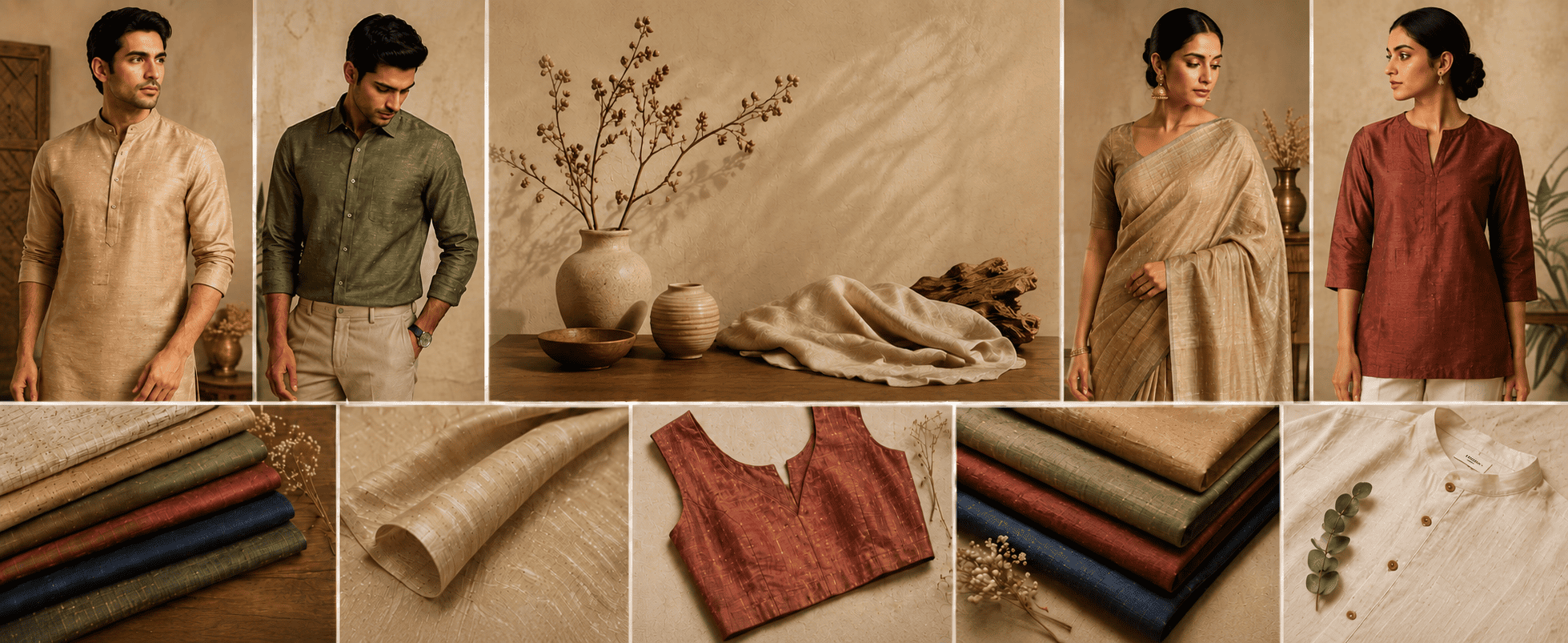
raw silk fabrics: uses, texture, and styling ideas
french terry vs. fleece: choosing the right loopback fabric for your collection
how emerging eco-conscious designers source ethical fabrics
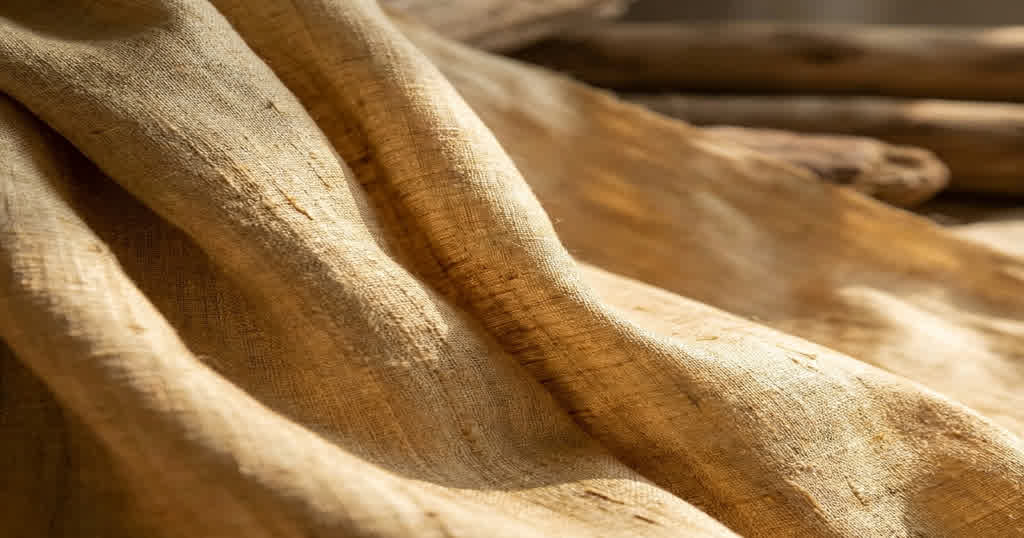
designing with tussar silk: drape, texture, and application in modern wear