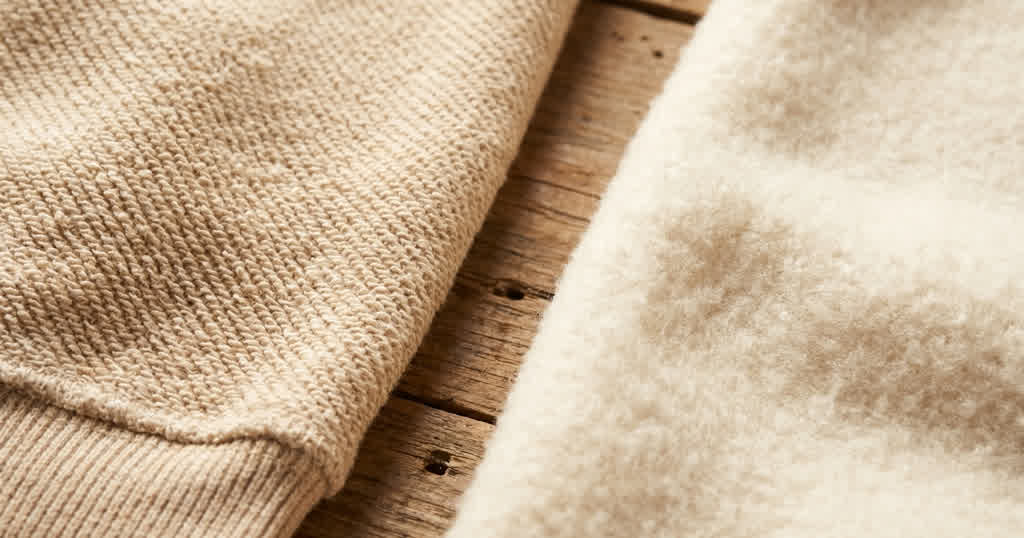
French Terry vs. Fleece: Choosing the Right Loopback Fabric for Your Collection

A designer sketching a transitional activewear line quickly faces a technical crossroads between french terry vs fleece. The decision dictates whether a garment will breathe during a morning run or trap heat during a winter commute. Both materials dominate the premium loungewear market, yet they behave entirely differently on the body despite sharing similar origins.
Understanding the structural differences between these two circular knits is critical for building a cohesive collection. The choice impacts everything from thermal retention to the brand's environmental footprint. Selecting the correct loopback fabric ensures the final piece aligns with both performance requirements and sustainable sourcing standards.
The Anatomy of Loopback: Structural Differences Between French Terry and Fleece
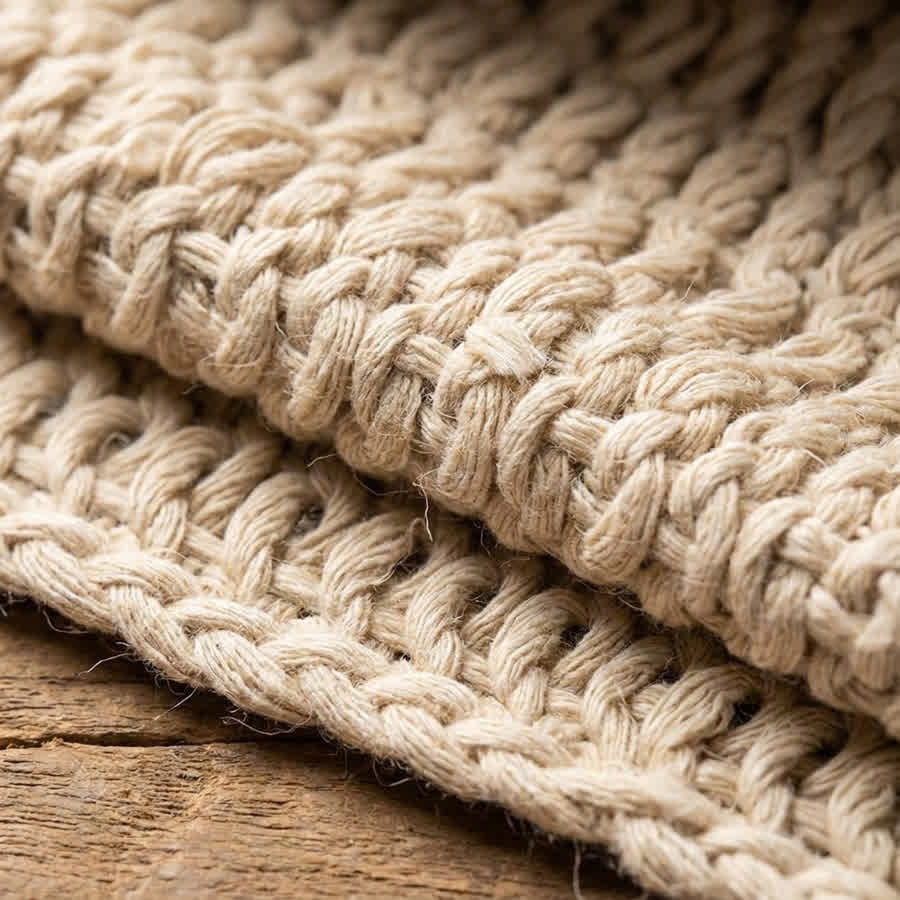
The primary structural difference between these fabrics lies in the finishing process, where fleece undergoes mechanical brushing to break its yarns into a fuzzy pile, while French Terry leaves its knitted loops intact. Both textiles begin their lifecycle on the exact same circular knitting machinery before diverging at the finishing stage. This divergence defines their distinct physical properties and end-use applications.
The Circular Knitting Foundation
Every roll of these fabrics starts as a standard weft knit construction. The knitting machines utilize a specific arrangement of needles to create a smooth face on one side and a series of loops on the reverse. This unbrushed loopback construction is the defining characteristic of French Terry.
Originating in the 1980s as a lighter evolution of traditional terry cloth toweling, French Terry was specifically engineered for athletic wear. The intact loops provide excellent structural stability and a dry, crisp hand-feel against the skin. Designers rely on this specific architecture when they need a fabric that drapes well without adding excessive bulk to the silhouette.
The Mechanical Napping Process
To create fleece, the base loopback fabric must pass through a specialized finishing treatment. Modern cotton fleece evolved from synthetic polar fleece in the late 1970s, eventually transitioning back to brushed natural cotton variants to meet the demand for premium winter loungewear. The transformation requires specific mechanical interventions.
The finishing facility employs a mechanical napping process to alter the fabric's reverse side. This procedure involves passing the knit over cylinders covered in fine wire brushes. The process yields several distinct structural changes:
- Yarn breakage: The wire brushes physically tear the top fibers of the knitted loops.
- Pile creation: The broken fibers are teased upward to form a dense, plush insulating layer.
- Tensile reduction: The physical breaking of the yarns slightly reduces the overall tensile strength of the textile.
Thermal Dynamics and GSM: Matching Fabric to Climate and Collection
Fleece provides superior thermal insulation by trapping dead air within its brushed pile, whereas French Terry offers high breathability and moisture absorption through its open loop structure. Designers must match these thermal profiles and their corresponding fabric weights to the specific seasonal requirements of their collections. A miscalculation in weight can render a garment unwearable for its intended climate.
Moisture Management and Breathability
French Terry excels in environments where temperature regulation and moisture management are paramount. The intact loops on the fabric's reverse side create a highly efficient moisture-wicking micro-climate. This structure increases the surface area available to absorb sweat away from the body.
Because the loops remain unbroken, air circulates freely through the knit structure. This high breathability makes French Terry the standard choice for transitional activewear and spring collections. The fabric typically ranges from a 200 to 350 GSM weight, providing enough substance for durability while preventing the wearer from overheating during physical exertion.
Insulation and Fabric Weight
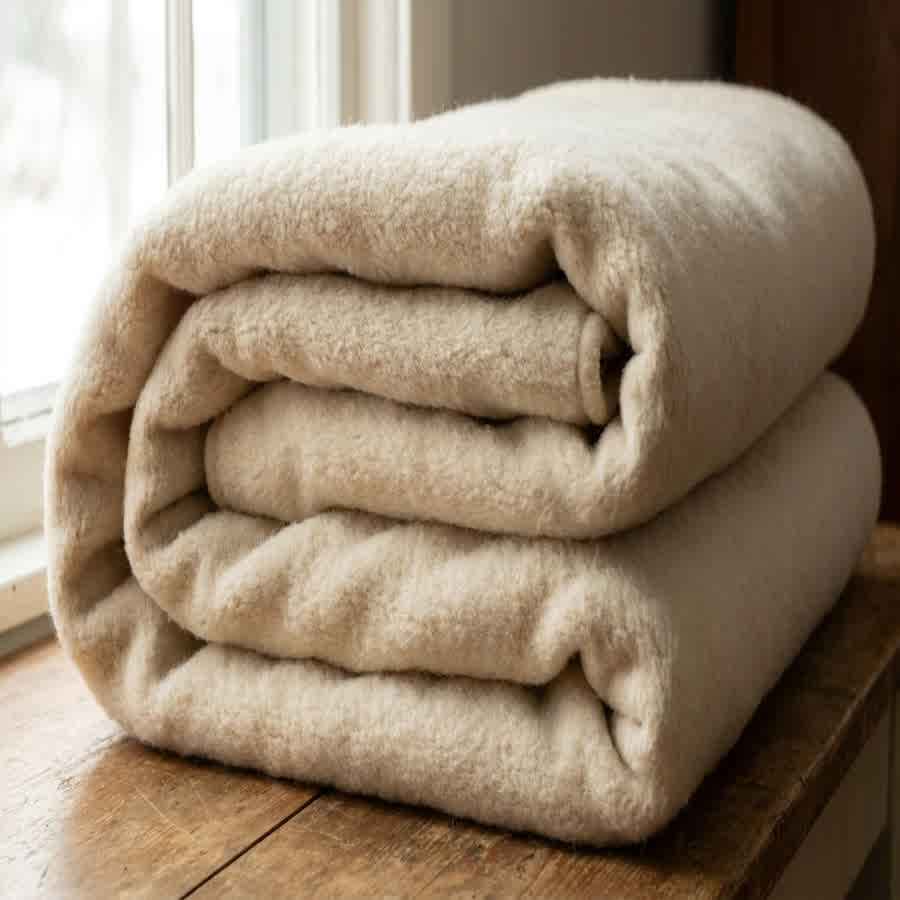
When a collection requires serious cold-weather performance, fleece becomes the necessary choice. The brushed pile surface created during the napping process acts as a highly effective thermal barrier. The teased fibers trap microscopic pockets of dead air, which are warmed by the body and held close to the skin.
To compensate for the structural weakening caused by brushing, and to maximize insulation, fleece requires a heavier base construction. Sourcing managers evaluating french terry vs fleece for winter lines must consider these specific weight requirements:
- High-density base: Fleece is typically knit at a 280 to 450+ GSM weight to ensure adequate yarn volume.
- Thermal retention: The dense pile drastically reduces air permeability, prioritizing warmth over breathability.
- Volume and drape: The heavier weight and brushed reverse create a stiffer, more voluminous drape suited for oversized hoodies and heavy sweatpants.
Sustainability in Knits: Why the Yarn Matters More Than the Finish
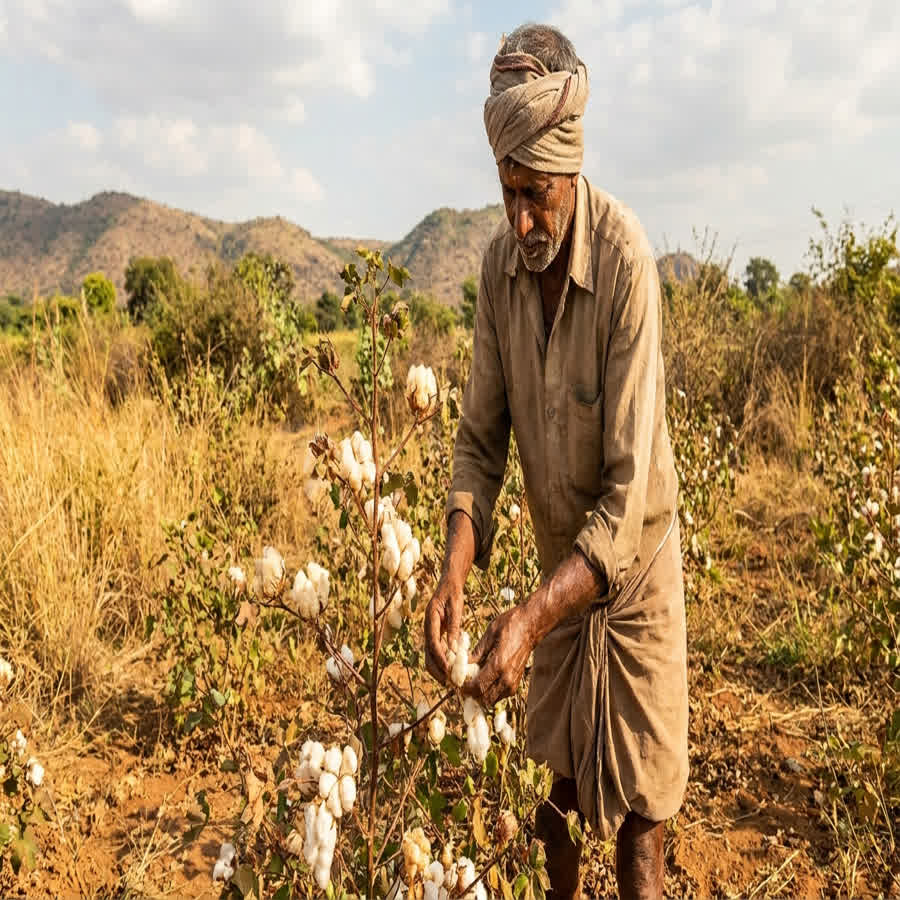
The environmental impact of loopback fabrics depends heavily on the raw fiber choice, making organic and indigenous cottons essential for reducing water consumption and chemical usage. Transitioning away from synthetic blends prevents microplastic pollution while supporting regenerative agricultural practices. For B2B buyers, the sustainability narrative begins at the farm level, long before the fabric is knitted or brushed.
The Microplastic Problem in Synthetics
The textile industry has historically relied on polyester and acrylic blends to produce cheap, lightweight fleece. However, the mechanical brushing process that gives synthetic fleece its soft, fuzzy texture also makes it highly susceptible to shedding. Every time a synthetic fleece garment is washed, it releases thousands of microscopic plastic fibers into the water system.
Conscious designers are actively moving away from these petroleum-based yarns. By choosing 100% natural cotton for their loopback fabric needs, brands eliminate the risk of microplastic shedding entirely. This shift is increasingly required by stringent brand eco-standards and informed consumers who demand clean, biodegradable materials.
Indigenous Cottons and Eco-Luxury
To minimize the environmental footprint of these staple knits, the focus must shift to the specific variety of cotton used. Anuprerna champions the use of indigenous Indian cottons, such as Kala cotton, which are naturally pest-resistant and entirely rain-fed. This drastically lowers the water footprint compared to conventional, irrigated cotton farming.
Integrating these heritage fibers into modern circular knits transforms a basic commodity into an eco-luxury textile. The benefits of sourcing these specific yarns include:
- Zero-waste credentials: Rain-fed indigenous cottons require no synthetic fertilizers or diverted irrigation.
- Chemical reduction: Utilizing organic cotton yarns ensures the final fabric is free from toxic pesticide residues.
- Carbon mitigation: Decentralized farming and processing reduce the heavy industrial emissions associated with mass-market textile manufacturing.
Pilling, Durability, and Wash Care: A B2B Quality Assurance Guide
French Terry inherently resists pilling and maintains high tensile strength due to its intact yarn structure, whereas fleece requires careful engineering to prevent surface degradation over time. The mechanical brushing that creates fleece physically weakens the yarns, demanding higher quality base fibers to ensure commercial longevity. Understanding these wear patterns is crucial for maintaining brand reputation and minimizing customer returns.
Structural Integrity and Tensile Strength
The unbroken loops of French Terry provide a highly stable and durable fabric face. Because the yarn structure remains completely intact, the fabric easily withstands repeated friction and stretching. This inherent strength makes it ideal for high-movement garments like athletic joggers and warm-up jackets.
When comparing french terry vs fleece, the tensile strength of the unbrushed variant is noticeably higher. The loops act as tiny shock absorbers, allowing the knit construction to flex and recover without snapping individual fibers. This structural integrity translates directly to a longer garment lifespan and a lower cost-per-wear for the end consumer.
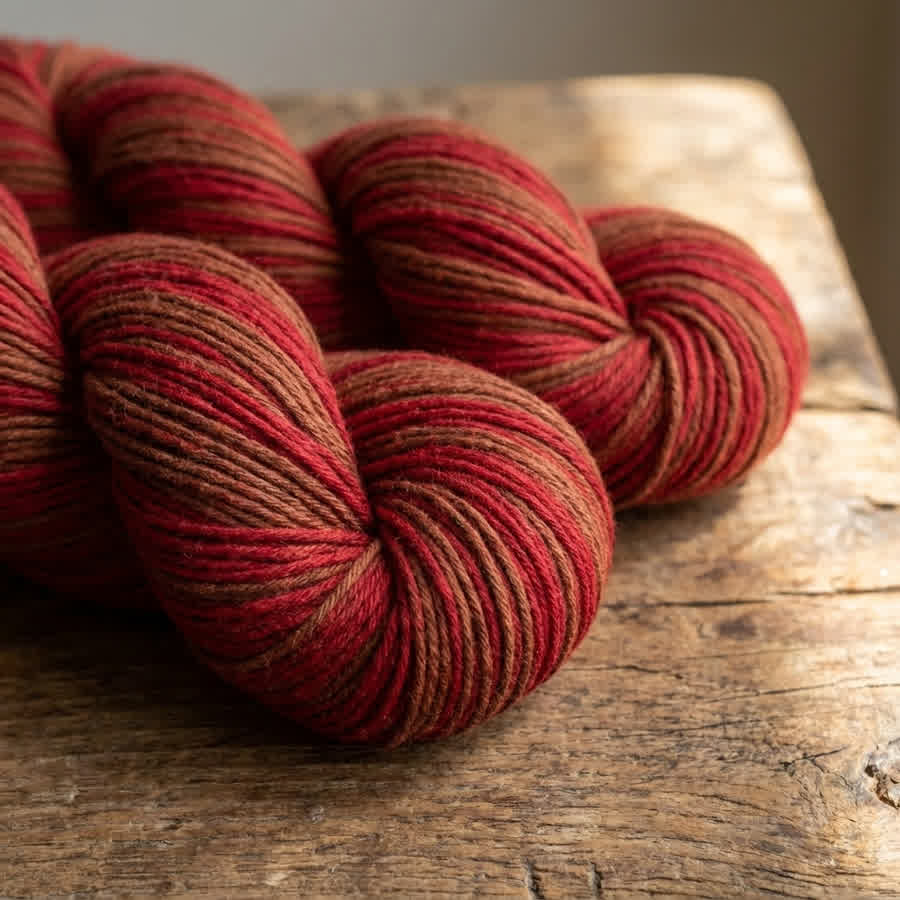
Preventing Surface Degradation
Fleece presents a specific technical pain point for sourcing managers: the tendency to pill. Because the napping process intentionally breaks the yarns to create a plush pile, these loose fibers can easily tangle into small, hard balls during washing and wearing. This surface degradation quickly makes a premium garment look cheap and worn out.
To combat this issue, high-quality fleece production requires strict quality assurance protocols. B2B buyers should look for specific manufacturing standards to ensure durability:
- Long-staple fibers: Using longer cotton fibers reduces the number of loose ends available to tangle and pill.
- High-twist yarns: Tightly spun yarns hold their structure better during the mechanical napping process.
- Enzyme washing: A bio-polishing step can be applied to remove excess loose fibers before the fabric is cut and sewn.
Sourcing with Anuprerna: Improve Basics with Artisan-Backed Transparency
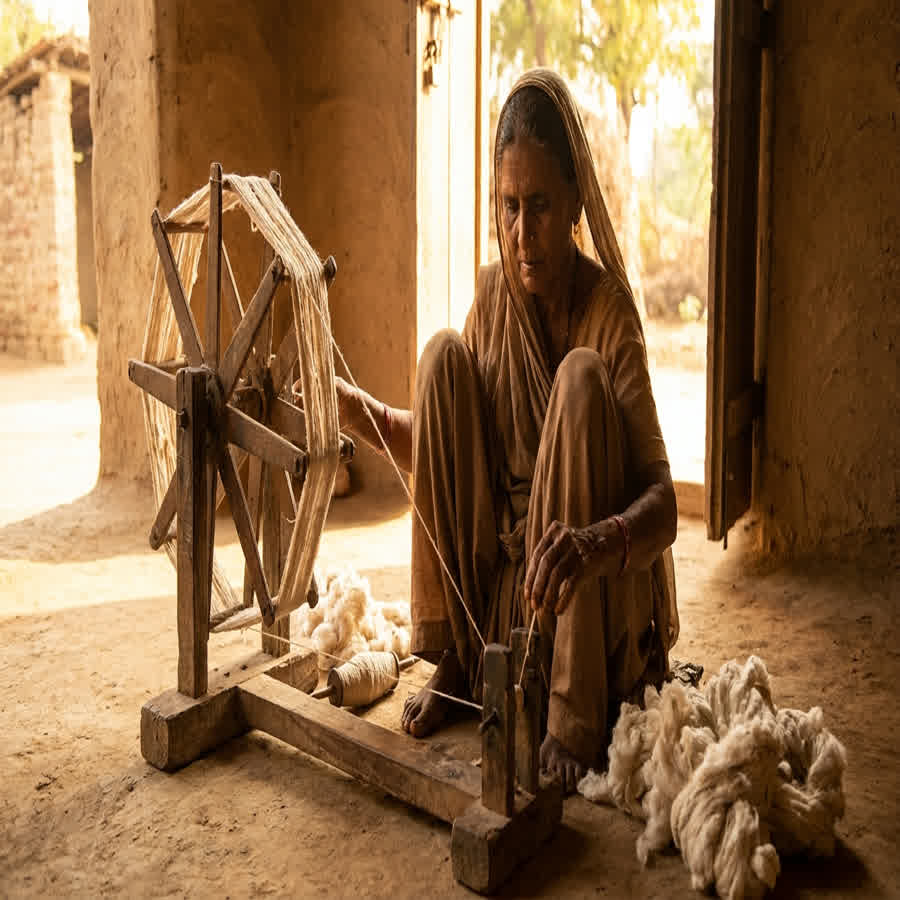
Sourcing premium knit fabrics through Anuprerna guarantees a transparent, decentralized supply chain that prioritizes ethical production and indigenous Indian cottons. This approach transforms standard commodity textiles into traceable textile solutions suitable for conscious fashion collections. We provide designers with the exact specifications they need, backed by a supply chain they can proudly market.
Decentralized Artisan Production
The conventional production of heavy knits often relies on opaque, centralized mega-factories with heavy carbon footprints. Anuprerna takes a different approach by working directly with a decentralized supply chain across rural India. We coordinate with specialized regional clusters to source a fine organic and indigenous cottons directly from the farmers.
This localized approach ensures that the economic benefits of textile production remain within the farming and spinning communities. By avoiding mass-market consolidation, we maintain strict control over the ethical production standards at every stage. The result is a fabric that carries a genuine story of community support and heritage craftsmanship.
Traceability in B2B Sourcing
For a premium loungewear sourcing manager, verifying the origin of a fabric is just as important as checking its GSM. Anuprerna provides complete visibility into the journey of our loopback fabrics. We document the entire process, from the specific district where the cotton was grown to the facility where the azo-free dyeing takes place.
This level of detail arms designers with the concrete facts necessary to support their sustainability claims. When you source your french terry vs fleece through our network, you receive specific guarantees:
- Verified origins: Exact geographic data detailing where the indigenous Indian cottons were cultivated.
- Clean chemistry: Certification that all finishing and dyeing processes utilize low-impact, non-toxic formulations.
- Custom specifications: The ability to precisely dictate the fabric weight and finish to match your seasonal collection needs.
frequently asked questions
Can French Terry and Fleece be made from the exact same base knit?
Yes. Both fabrics start as a loopback knit on a circular knitting machine. The difference lies entirely in the finishing process; fleece is passed through a napping machine with fine wire brushes that break and tease the loops to create a fuzzy pile, whereas French Terry leaves the loops intact.
Which fabric offers better moisture-wicking properties for activewear?
French Terry is vastly superior for moisture management. Its intact loops increase the surface area for absorbing sweat and allow for greater air circulation, making it ideal for warm-ups and transitional weather. Fleece is designed primarily for thermal insulation and retains moisture longer.
How does the brushing process affect the tensile strength of fleece?
The mechanical napping process slightly reduces the tensile strength of the fabric because it physically breaks the loop yarns to create the pile. To compensate for this structural weakening, high-quality fleece is usually knit at a higher GSM or blended with stronger, longer-staple fibers.
Are Anuprerna's French Terry and Fleece options sustainably dyed?
Yes, we prioritize Azo-free, low-impact, and natural dyes within our decentralized supply chain. This ensures that the chemical footprint of our knit fabrics is minimized while maintaining the stringent colorfastness required for commercial B2B collections.
What is the ideal GSM range for a heavy winter fleece?
The ideal weight for a heavy winter fleece typically falls between 350 and 450 GSM. This higher density provides the necessary yarn volume to create a thick, insulating pile without compromising the structural integrity of the base knit.
More Blogs
malmal cloth in english: understanding the global appeal of mul cotton
wholesale cotton fabric: how to choose the right supplier
screen printing on fabric: techniques, process & applications in fashion

linen gym wear: can you really workout in natural fibers?
what to look for during khadi online shopping?
top 5 upcycled fabric products you can make at home