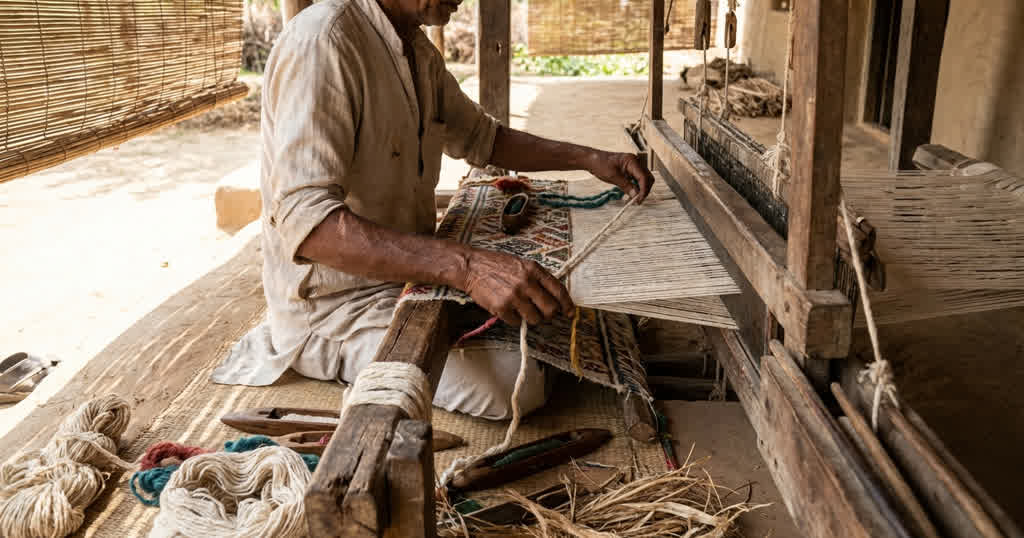
Advanced Weaving Techniques: Beyond the Plain, Twill, and Satin Weaves

Designers are increasingly finding that standard plain and twill structures are too easily replicated by mass-market competitors. To justify premium pricing and establish a distinct tactile identity, sourcing teams must look toward advanced fabric weaving techniques. These complex structural methods move past basic warp and weft interlacing, offering bespoke textures that cannot be quickly churned out by industrial power looms.
The shift toward these intricate constructions is rooted in both material science and market demand for zero-carbon production. By integrating centuries-old Indian handloom traditions with modern design requirements, brands can secure textiles that offer compelling supply chain transparency. This transition allows independent designers to build collections around fabrics that possess inherent structural value, crisp hand-feel, and verifiable artisanal origins.
Deconstructing Advanced Fabric Weaving Techniques: Beyond the Basics
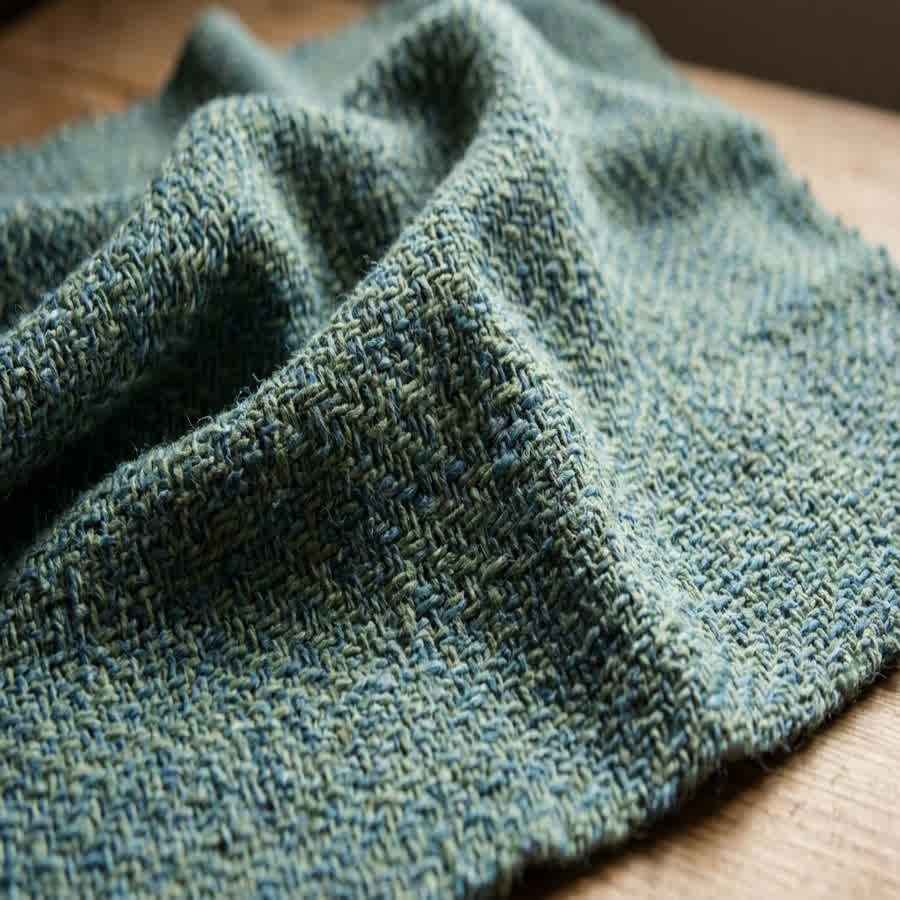
Advanced weaving techniques are defined by the complex manipulation of warp and weft yarns to alter the mechanical properties and surface texture of a fabric, moving beyond simple over-under interlacing. These methods require specialized loom setups and mathematical precision to execute accurately.
While standard plain, twill, and satin weaves form the foundation of commercial textiles, they often lack the structural drape required for high-end bespoke garments. By altering how the yarns intersect, artisans can engineer fabrics with specific performance traits.
The Mechanics of Complex Interlacing
Basic weaves rely on a straightforward binary shedding process, but advanced structures introduce secondary yarn systems or resist dyeing prior to weaving, as seen in traditional Ikat. This requires a decentralized loom setup where weavers manually control individual threads.
The resulting textiles exhibit unique physical characteristics that industrial multi-shaft looms struggle to replicate sustainably. Designers sourcing these fabrics benefit from distinct mechanical advantages:
- Increased tensile strength through interlocking yarn layers.
- Targeted breathability achieved by twisting warp threads to prevent slippage.
- Bespoke motif integration where patterns are woven directly into the base structure.
Transitioning from Basics to Artisanal Complexity
Historically, these intricate methods originated as highly prized royal court textiles in India. Today, they serve as a critical differentiator for B2B buyers shifting away from mass-produced basics.
Implementing advanced fabric weaving techniques requires a deep understanding of yarn behavior under tension. Artisans must carefully calculate the picks per inch (PPI) to ensure the fabric maintains its integrity without becoming overly stiff.
We currently work with artisan clusters across Bengal that specialize in these exact structural variations. By utilizing decentralized handloom networks, we provide designers access to fabrics that blend historical craftsmanship with modern zero-waste credentials. This ensures every yard of fabric meets strict quality standards while supporting rural economies with a rich, textured surface.
Jamdani & Extra-Weft: The Pinnacle of Hand-Manipulated Motifs
Jamdani is a discontinuous extra-weft technique where artisans manually insert supplementary yarns into the warp during weaving to create intricate, non-structural motifs. This process functions essentially as embroidery on the loom, adding decorative elements without compromising the base fabric.
Unlike industrial Jacquard weaving, which uses continuous threads that must be cut or floated across the back, Jamdani motifs are woven precisely where needed. This results in a clean reverse side and a light, breathable drape.
The Science of Discontinuous Weft Insertion
Executing this technique requires exceptional skill, as the weaver must read a paper pattern and manually lift specific warp threads for every single pick. The supplementary yarn is typically thicker or of a contrasting color, creating a raised texture against a sheer background.
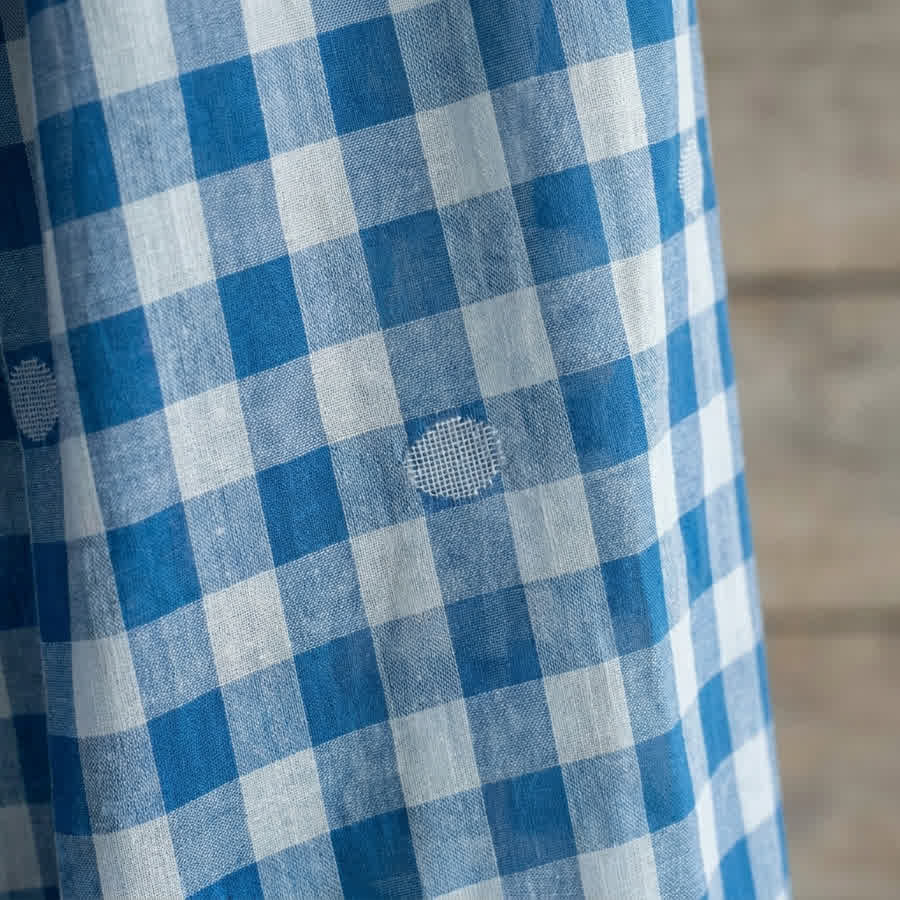
This manual insertion directly impacts the fabric mechanics and overall weight. Because the extra yarn is only added locally, the base textile retains a low GSM (Grams per Square Meter), making it ideal for summer collections.
When sourcing extra-weft fabrics, designers should consider the specific properties that define high-quality execution:
- Motif clarity achieved through precise yarn tension and manual packing.
- Zero yarn waste since the supplementary thread is only used within the motif boundaries.
- Reversible aesthetics resulting from the careful locking of the extra weft into the base weave.
Balancing GSM and Drape in Extra-Weft Fabrics
The base fabric for Jamdani is traditionally a fine muslin or high-twist cotton, which provides a crisp, airy feel. The addition of the extra-weft motifs slightly increases the localized weight, creating a beautiful structural contrast.
By utilizing advanced fabric weaving techniques like Jamdani, brands can offer garments that feature complex, bespoke designs. This method allows for high customization, as motifs can be altered without re-engineering the entire loom setup.
We collaborate with specialized weaving families in West Bengal to produce these textiles, ensuring the generational handloom expertise is preserved. For B2B buyers, this translates to unique, artisanal fabrics that carry a strong narrative of ethical sourcing and meticulous craftsmanship.
Leno and Mock Leno: Engineering Breathability and Sheerness
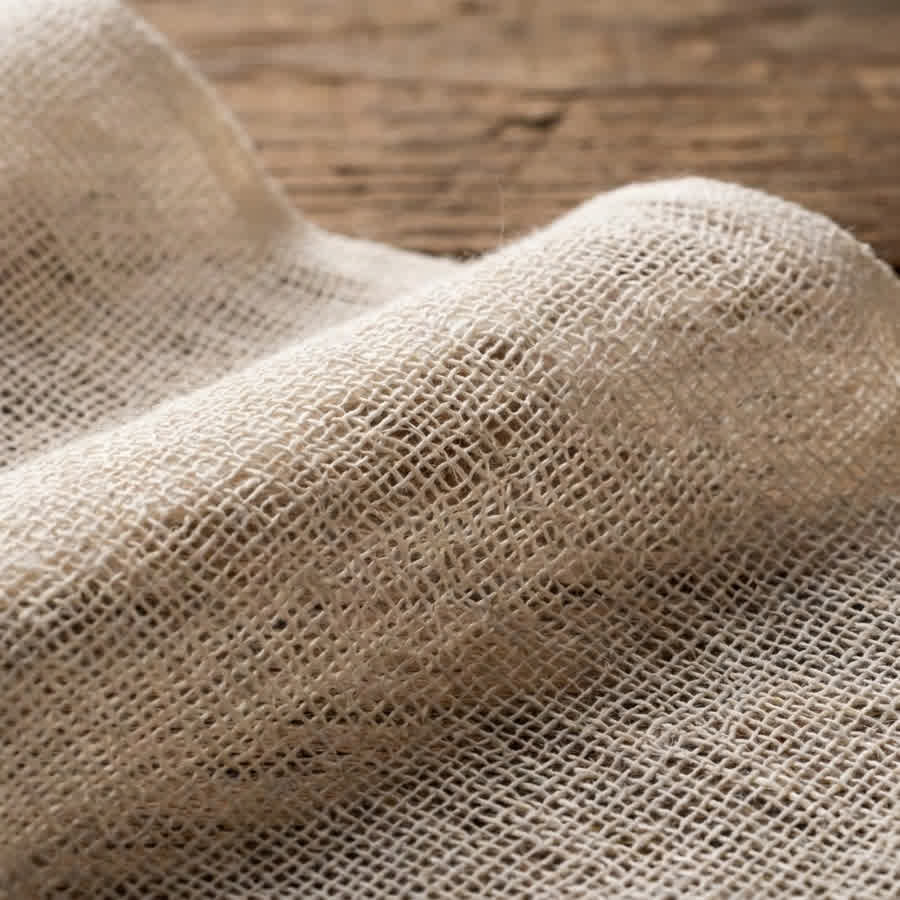
Leno weaves engineer breathability by twisting adjacent warp yarns around the weft in a figure-eight pattern, locking the threads securely in place. This structural manipulation creates an open, sheer fabric that resists yarn slippage and maintains high tensile stability.
In standard plain weaves, creating an open structure often results in a fragile textile where yarns easily shift out of alignment. The Leno technique solves this by mechanically binding the intersections, allowing for extremely low weights, typically between 50-90 GSM.
The Mechanics of the Figure-Eight Twist
To achieve this structure, the loom is equipped with specialized doup heddles that cross the warp threads before the weft is inserted. This crossing action requires precise tension control to ensure the sheer, open mesh remains uniform across the entire width of the fabric.
The resulting textile offers superior sheer breathability without compromising durability. This makes it an exceptional choice for high-end summer apparel, lightweight overlays, and structural linings.
Designers specifying Leno or Mock Leno fabrics benefit from several distinct material advantages:
- High resistance to slippage, ensuring seams hold firmly despite the open weave.
- Enhanced air permeability, providing maximum comfort in warm climates.
- Structural drape that holds its shape better than loosely woven plain fabrics.
Mock Leno and Commercial Applications
While true Leno requires specialized heddles, Mock Leno achieves a similar textured, cellular appearance through specific interlacing patterns on a standard multi-shaft setup. The yarns are grouped together, creating small openings that mimic the breathability of true Leno.
Integrating these advanced fabric weaving techniques into a collection allows brands to offer technical performance rooted in natural fibers. Whether using fine organic cotton or Ahimsa silk, the open structure maximizes the natural cooling properties of the material.
We source these engineered sheer fabrics from skilled artisans who understand the exact yarn twist requirements needed for stability. For a sourcing director, this means access to reliable, high-performance textiles that maintain strict zero-carbon production standards.
Double Cloth & Reversible Weaves: Maximizing Utility and Weight
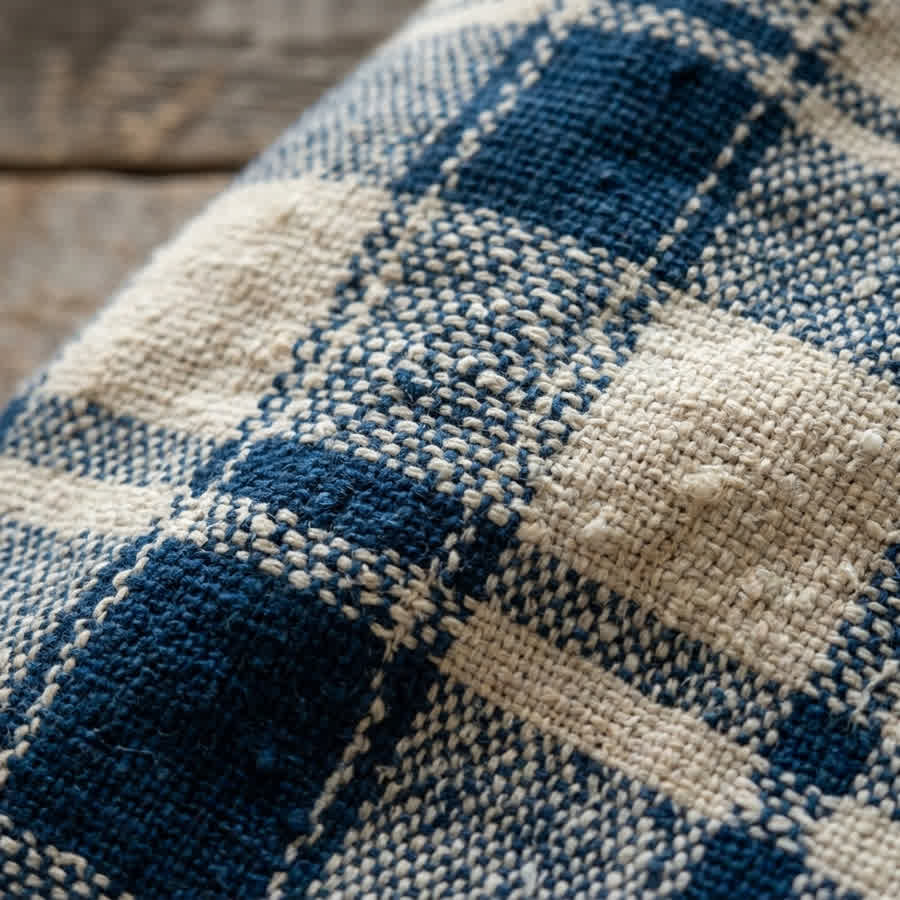
Double Cloth maximizes utility by simultaneously weaving two distinct layers of fabric that are periodically interlocked by binding threads. This creates a heavier, reversible textile with high insulation properties and contrasting faces, ideal for structured outerwear.
By stacking two separate warp and weft systems on the loom, artisans can engineer fabrics that range from 150-350 GSM. This complex setup allows for completely different colors or patterns on each side of the woven cloth.
Structural Drape and Tensile Strength
The interlocking nature of Double Cloth significantly alters the fabric mechanics. The binding points between the two layers prevent them from separating, resulting in a textile with exceptional tensile strength and a dense, substantial hand-feel.
Because the layers trap air between them, the fabric naturally provides excellent thermal insulation. This makes it a highly functional choice for transitional weather garments and premium winter collections.
When evaluating Double Cloth for B2B sourcing, buyers should note the specific structural benefits:
- Reversible design capabilities, allowing for unlined garments with finished interiors.
- Enhanced structural drape, providing tailoring stability for coats and jackets.
- Increased durability due to the dense, multi-layered yarn architecture.
Engineering Heavyweight Artisanal Textiles
Producing Double Cloth on a handloom requires immense physical effort and mathematical precision. The weaver must manage double the number of warp threads and ensure the tension remains perfectly balanced between the top and bottom layers.
Utilizing these advanced fabric weaving techniques provides independent designers with materials that possess inherent architectural volume. The ability to create a thick, protective textile entirely through manual interlacing is a testament to the sophistication of rural weaving clusters.
We facilitate the production of these heavyweights by matching brands with artisans capable of handling complex, multi-layered drafts. This ensures that even high-GSM fabrics retain their artisanal origins and align with the brand's commitment to sustainable, zero-carbon production.
Integrating Artisanal Complexity into B2B Supply Chains
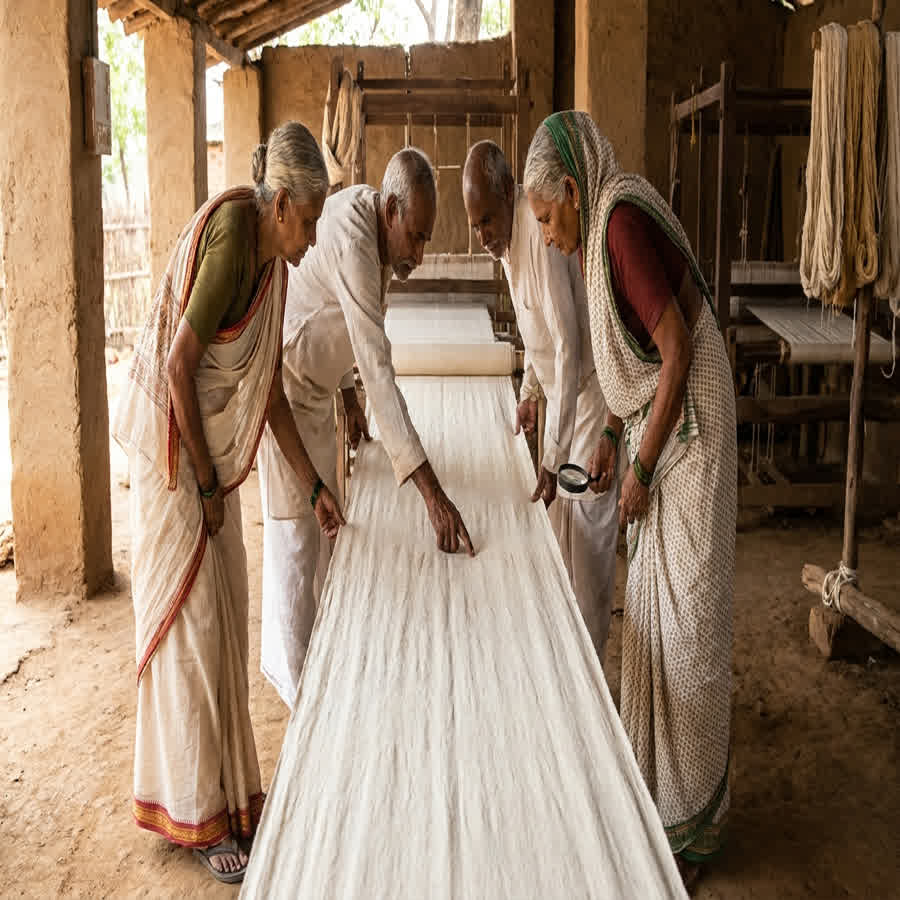
B2B brands can reliably source complex artisanal weaves by partnering with decentralized supply chains that manage quality assurance, raw material sourcing, and artisan coordination at the cluster level. This structured approach ensures predictable lead times and consistent quality for advanced handloom techniques.
Historically, sourcing intricate textiles like Jamdani or Double Cloth posed challenges for modern fashion calendars. The meticulous nature of hand-manipulated motifs naturally dictates a slower production pace compared to mechanized output.
Managing Lead Times and MOQs
To successfully integrate these fabrics, sourcing directors must adjust their timeline expectations. While a basic twill might yield several meters a day, complex structures require careful, pick-by-pick execution, significantly impacting the daily yield.
However, this slower pace is offset by the advantage of low Minimum Order Quantities (MOQs). Decentralized handlooms do not require the massive setup volumes of industrial mills, allowing brands to test bespoke designs without heavy inventory risk.
Effective integration relies on clear communication of technical specifications:
- Accurate GSM targeting to ensure the final fabric meets the garment's structural needs.
- Precise motif drafting to minimize loom setup delays and sampling iterations.
- Transparent timeline mapping that accounts for the manual nature of the craft.
Quality Assurance in Decentralized Networks
Maintaining consistency across multiple independent weavers requires rigorous oversight protocols. We implement standardized quality control measures at every stage, from yarn dyeing to the final fabric inspection.
By systematizing the production of advanced fabric weaving techniques, we bridge the gap between rural artisans and global fashion markets. This ensures that the rich, tactile quality of the textiles is matched by professional sourcing reliability.
For an ethical sourcing director, this model provides a verifiable narrative of supply chain transparency. It proves that high-density, structurally complex fabrics can be produced sustainably, offering a viable, premium alternative to the fast-fashion supply model.
frequently asked questions
Q: What is the typical MOQ for custom advanced handloom weaves like Jamdani?
Unlike industrial Jacquard requiring thousands of meters, decentralized handlooms can execute custom extra-weft designs at MOQs as low as 50-100 meters. This lower threshold is possible because manual looms do not require massive industrial warping, though setup and drafting times are longer.
Q: How does the tensile strength of a Leno weave compare to a standard plain weave?
Leno weaving provides superior resistance to yarn slippage and higher tensile stability compared to a loose plain weave of similar GSM. Despite its open structure, the technique twists the warp yarns around the weft in a figure-eight, mechanically locking them in place.
Q: Can advanced weaving techniques be executed with organic cotton or Ahimsa silk?
Yes, techniques like extra-weft and double cloth are highly compatible with Ahimsa silk, organic cotton, and linen. The primary requirement is that the yarn possesses sufficient twist (TPI) and tensile strength to withstand the complex loom shedding and friction inherent in these methods.
Q: What is the lead time difference between basic twill and advanced extra-weft fabrics?
Complex Jamdani yields 1-2 meters a day, extending production lead times by 30-50% depending on motif density, whereas a plain or twill weave might yield 5-8 meters a day per artisan. Advanced techniques require meticulous hand-manipulation per pick, which naturally slows the weaving process.
Q: How do Double Cloth fabrics maintain their structure without separating?
Double Cloth fabrics maintain their structure through the use of specific binding threads that periodically interlock the two distinct woven layers during the weaving process. This integrated binding prevents the layers from shifting or separating, resulting in a unified, heavy-weight textile with high durability.
More Blogs
understanding jacquard weaving techniques
mastering the satin weave pattern: characteristics and uses
wholesale earthy-tone handloom cotton for designers
buying khadi cotton fabric online: what “authentic” really means and how to choose fabric that lasts

10 durga puja outfit ideas for women in 2026
eco-friendly trims: sourcing sustainable fashion accessories