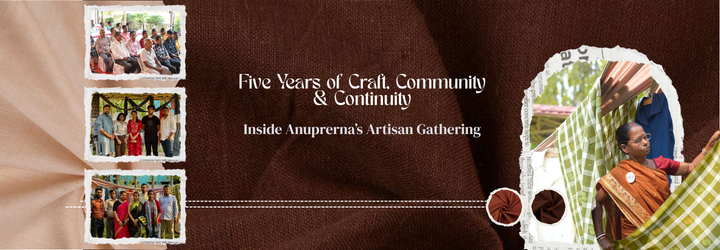
Five Years of Craft, Community, and Continuity: Inside Anuprerna’s Artisan Gathering

On 25th March 2026, Anuprerna marked five years of building something that rarely fits neatly into business categories. It is not just a textile company. It is not just a marketplace. And it is certainly not a traditional supply chain.
It is a network. A living, evolving system built on people, processes and trust.
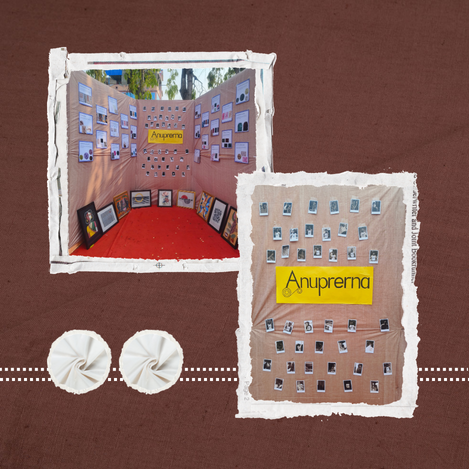
To celebrate this milestone, over 100 artisans from across clusters in East India came together for a day that was less about ceremony and more about recognition. The gathering was not designed as a showcase. It was designed as a moment of alignment. Because five years in, the real question is not what has been built. It is whether what has been built can sustain, scale and stay true to its core.
This event was a reflection of that question.
A Milestone Rooted in People, Not Just Progress
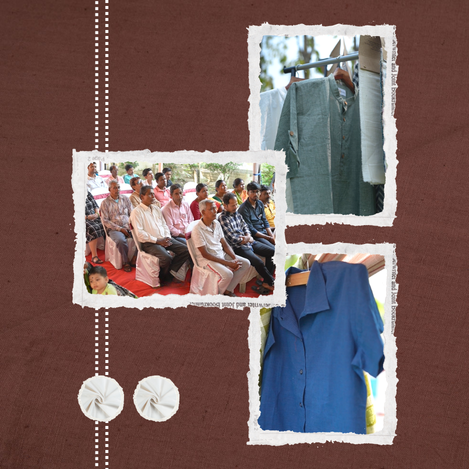
People Before Process: The Real Milestone
Most of Anuprerna’s ecosystem operates in a decentralized way. Artisans work from their homes, across villages and clusters, often connected through coordinators and systems rather than physical proximity.
Which means something important: many of them had never met each other. The gathering changed that.
For the first time, artisans across the same value chain shared one physical space. Spinners, dyers, weavers, and finishers who contribute to the same fabric but rarely see the full picture. That shift matters.
When a supply chain becomes visible to itself, it stops functioning as a fragmented system and starts operating as a community. Conversations moved beyond tasks. Experiences were exchanged, challenges discussed openly, and many finally saw how their role connects to a larger global structure. This awareness is not superficial. It directly improves quality, ownership and long-term consistency.
How the Founders Are Reshaping the Artisan System
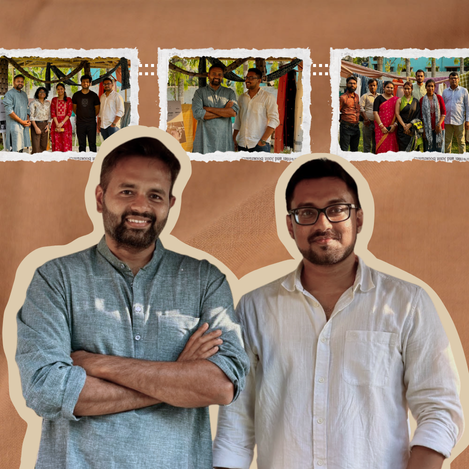
From Intent to System: The Founders’ Perspective
From Craft to System: Why the Model Had to Evolve
For both the founders, the event was less about marking five years and more about validating a direction they have been quietly building towards. Anuprerna did not start as a platform-first business. It started with a much simpler observation. Skilled artisans were producing high-quality textiles, but remained disconnected from consistent demand, fair pricing and structured systems that could support long-term growth. The early years were spent solving for reliability. Building trust across clusters. Ensuring quality could hold across decentralized production. Creating repeatable processes where most systems rely on informal coordination.
But that approach has limits. As demand grows, manual systems begin to break. Communication gaps widen. Visibility reduces. And what once worked at a smaller scale starts creating friction. This is where the shift towards a tech-enabled system began.
For Amit, the focus has remained on ensuring that growth does not come at the cost of the artisan. That scaling the business should directly translate into more consistent work, better earnings and clearer visibility for the people at the core of the system.
For Debabrata, the challenge has been translating that philosophy into infrastructure. Building tools that do not overcomplicate workflows, but instead reduce friction. Systems that fit into how artisans already work, rather than forcing them into rigid digital processes.
The launch of the Anuprerna Artisans App is a direct outcome of this alignment. It is not positioned as a feature. It is a structural shift. One that moves the system from coordination-heavy to system-driven, without removing the human layer that makes it work. Both founders acknowledged that this is still early. Technology will need iteration. Adoption will take time. And the balance between control and flexibility will continue to evolve. But the intent is clear. This is no longer just about connecting artisans to markets. It is about building a system where that connection can sustain, adapt and scale without breaking.
Voices From Across the Ecosystem
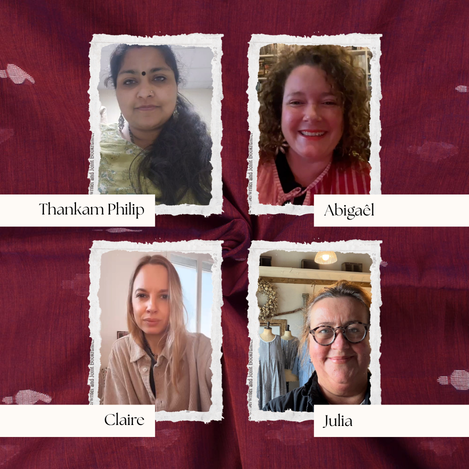
Closing the Gap Between Makers and Markets
One of the most important segments of the event was hearing from people outside the immediate artisan network. Clients, partners and collaborators shared their perspectives, not as buyers but as participants in the ecosystem. This matters because artisans often operate far removed from the end consumer. Feedback, when it comes, is filtered, delayed or purely transactional.
Here, it was direct.
Stories were shared about how these fabrics are used, where they travel and what they represent in different parts of the world. There was an emphasis not just on product, but on value. On why handwoven, small-batch textiles still matter in a system increasingly driven by speed and scale.
For artisans, this creates a shift from task-based work to purpose-driven work. And for Anuprerna, it reinforces something critical. The demand is not just for fabric. It is for what the fabric stands for.
Moving from Coordination to a System-Driven Network
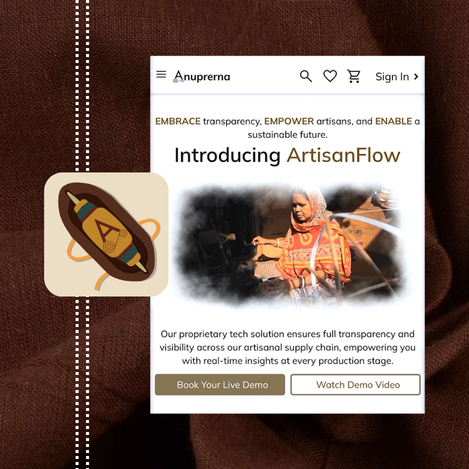
The Launch of the Anuprerna Artisans App
The Shift to a System-Led Artisan Network
If the first half of the day was about reflection, the second half was about direction. The launch of the Anuprerna Artisans App marked a clear step towards a more structured, transparent, and scalable system.
At a surface level, the app enables artisans to:
- Upload product catalogues
- Update stock availability
- Track orders in real time
- Receive assignments and share progress updates
- Communicate with coordinators using images and videos
But the real shift is deeper. Until now, most artisan networks operate on a dependency model. Information flows one way. Control is centralized. Visibility is limited. This app challenges that. It moves the system towards a more distributed model where artisans have clearer visibility into demand, timelines and expectations. Where master artisans can manage workflows. Where accountability becomes mutual instead of top-down.
There is a risk here, and it should be acknowledged. Technology does not automatically create empowerment. Poorly implemented, it can do the opposite. But when designed with context, it can reduce friction, improve consistency and unlock scale without losing the human layer. That is the bet being made.
Recognition Beyond Output
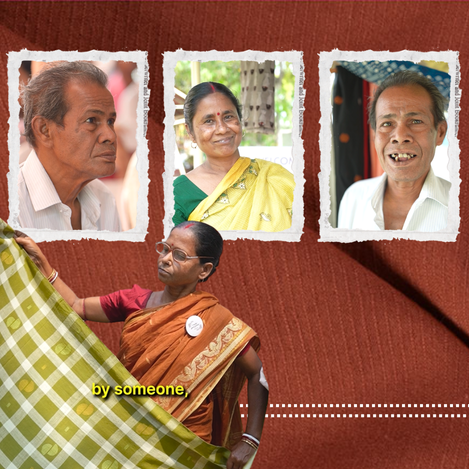
Redefining Recognition in Artisan Ecosystems
Another defining moment of the event was the felicitation segment. Recognition in artisan ecosystems is often tied to output. Volume, speed, or technical complexity. This event expanded that definition.
Artisans were acknowledged not just for what they produced, but for how they contributed to the system. Consistency, mentorship, adaptability and commitment were all part of the recognition. This shift is subtle but important. Because if you only reward output, you optimize for short-term efficiency. If you reward contribution, you build long-term resilience.
The stories shared during this segment reflected years of effort. Families involved in craft across generations. Individuals who adapted to new techniques. Clusters that maintained quality despite external challenges. It grounded the event in something real. Not metrics. Not projections. People.
Between Tradition and Transition
Balancing Tradition with the Demands of Scale
One of the underlying themes across the event was tension. Not conflict, but balance.
On one side, there is tradition. Techniques passed down over generations. Processes that are slow by design. A way of working that prioritizes craft over speed. On the other side, there is transition. Global demand. Digital systems. Expectations of consistency, timelines and scalability. Most systems fail because they lean too far in one direction. They either preserve tradition without adapting, which limits growth. Or they chase scale and efficiency, which erodes the very value they started with.
Anuprerna’s approach sits somewhere in between. The goal is not to modernize craft for the sake of it. It is to build systems around craft that allow it to survive and grow in a changing market. That is harder than it sounds. It requires constant adjustment. Trade-offs. Decisions that are not always obvious. The event did not present this as a solved problem. It presented it as ongoing work.
What This Means Going Forward
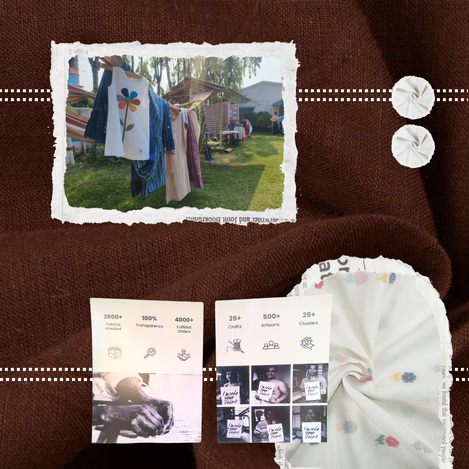
From Operations to Infrastructure: What Changes Now
If you strip away the event format, what remains is a signal. Anuprerna is moving from being a network that operates efficiently to a system that is designed to scale. The difference is structural. Efficiency can be managed manually. Scale cannot.
To scale, you need:
- Standardized processes
- Clear communication systems
- Distributed accountability
- Visibility across the value chain
This is where the combination of community and technology becomes critical. Without community, technology becomes rigid. Without technology, community becomes inconsistent. The direction is clear. Build both, and make them work together.
A System Still in the Making
Still Early, But Structurally Different
It would be easy to frame this event as a celebration of what has been achieved. That would be incomplete. This was less a conclusion and more a checkpoint.
Five years in, Anuprerna has built a functioning ecosystem. One that connects artisans to global markets, maintains a level of consistency and operates sustainably. But the real challenge starts now.
- Can this system scale without losing its core?
- Can artisans gain more control without increasing complexity?
- Can technology support craft without diluting it?
Those questions do not have immediate answers. What this event showed is that the intent is clear, the direction is defined and the people involved are aligned. And in systems like this, that alignment matters more than anything else.
Because in the end, fabric is only the output. The real product is the system behind it.
most asked questions
What was the purpose of Anuprerna’s 5-year artisan gathering?
The gathering was designed to bring together artisans across different stages of the value chain, many of whom had never met. It created visibility within the system, strengthened collaboration, and reinforced a shared understanding of how individual contributions connect to global markets.
How does Anuprerna maintain quality across a decentralized artisan network?
Quality is maintained through a hybrid model. While production is decentralized across artisan clusters, key processes such as dyeing, finishing, and quality checks are centralized. In addition, standardized workflows and tech-enabled tracking ensure consistency in specifications like GSM, weave density, and dye quality.
What role does the Anuprerna Artisans App play in the system?
The app enables artisans to manage catalogues, track orders, update progress, and communicate directly through images and videos. More importantly, it shifts the system from dependency-driven coordination to a more transparent, distributed model where artisans have greater visibility and control.
How does Anuprerna ensure scalability without compromising craftsmanship?
Scalability is achieved by combining standardized processes with a growing artisan network. Instead of centralizing production, Anuprerna scales by onboarding more trained artisans while maintaining strict quality control and workflow systems, ensuring consistency without losing the handwoven character.
What impact does Anuprerna create for artisans and their communities?
Anuprerna provides consistent work, improved income stability, and better visibility into demand for artisans. This not only supports livelihoods but also helps preserve traditional craft skills across generations, strengthening community resilience over time.
More Blogs

eco-friendly trims: sourcing sustainable fashion accessories

how to choose the right fabric wholesaler for your brand
what to look for in a silk manufacturer before you source
how does sustainable sourcing affect clothing quality?
what is a sustainable designer? roles, responsibilities, and impact
how celebrity endorsements are shaping the future of sustainable textiles